


close
Choose Your Site
Global
Social Media
Views: 299 Author: Maiwei Biotech Publish Time: 2026-11-10 Origin: Site


Content Menu
● How a Syringe Plunger Moves Forward and Backward
● Why Can a Syringe Plunger Move Forward but Not Backward? Five Main Causes
>> 1. An Auto-Disable Mechanism Has Activated
>> 2. A One-Way Valve Blocks Reverse Flow
>> 3. The Filling Pathway Is Closed or Restricted
>> 4. The Injector Piston Is Not Engaged for Retraction
>> 5. Stopper Friction, Misalignment, or Damage Increases Resistance
● Quick Comparison: Intentional Lock or Unexpected Problem?
● Why High-Pressure Injector Syringes Need a Different Assessment
>> Compatibility Means More Than Physical Fit
>> Pressure Ratings Do Not Explain Every Movement Problem
● A Safe Troubleshooting Workflow for a Syringe That Will Not Pull Back
>> Step 1: Protect the Patient and Pause the Process
>> Step 2: Identify the Exact Products
>> Step 3: Separate Mechanical Movement from Fluid Movement
>> Step 4: Inspect Only as the Instructions Permit
>> Step 5: Replace or Escalate Unresolved Problems
● Manufacturer Insight: Turn a Complaint into Useful Evidence
● What Buyers Should Request from a Syringe Manufacturer
● How MAIWEI INC. Can Support Your Evaluation
>> Is it normal for a syringe plunger to move forward but not backward?
>> Does "single-use" mean the plunger locks automatically?
>> Can a check valve stop a syringe from drawing fluid?
>> Should I pull harder when a syringe plunger is stuck?
>> Can I lubricate a syringe to restore backward movement?
>> Does a stuck injector syringe prove the injector is faulty?
A syringe plunger can move forward but not backward because a safety mechanism has locked, a one-way valve prevents reverse flow, the fluid pathway restricts filling, or the injector drive is not properly engaged. Excessive stopper friction or component damage can also cause resistance. The important distinction is whether backward movement is intentionally prevented or unexpectedly obstructed.
For CT, MRI, and angiography teams, this distinction matters. A standard manual syringe, an auto-disable syringe, and a high-pressure injector syringe do not necessarily operate in the same way.
From a manufacturing perspective, I would start with one question: "What is supposed to move backward—the stopper, the injector piston, or the fluid?" Separating these three movements helps identify the problem without assuming every stuck plunger is defective.

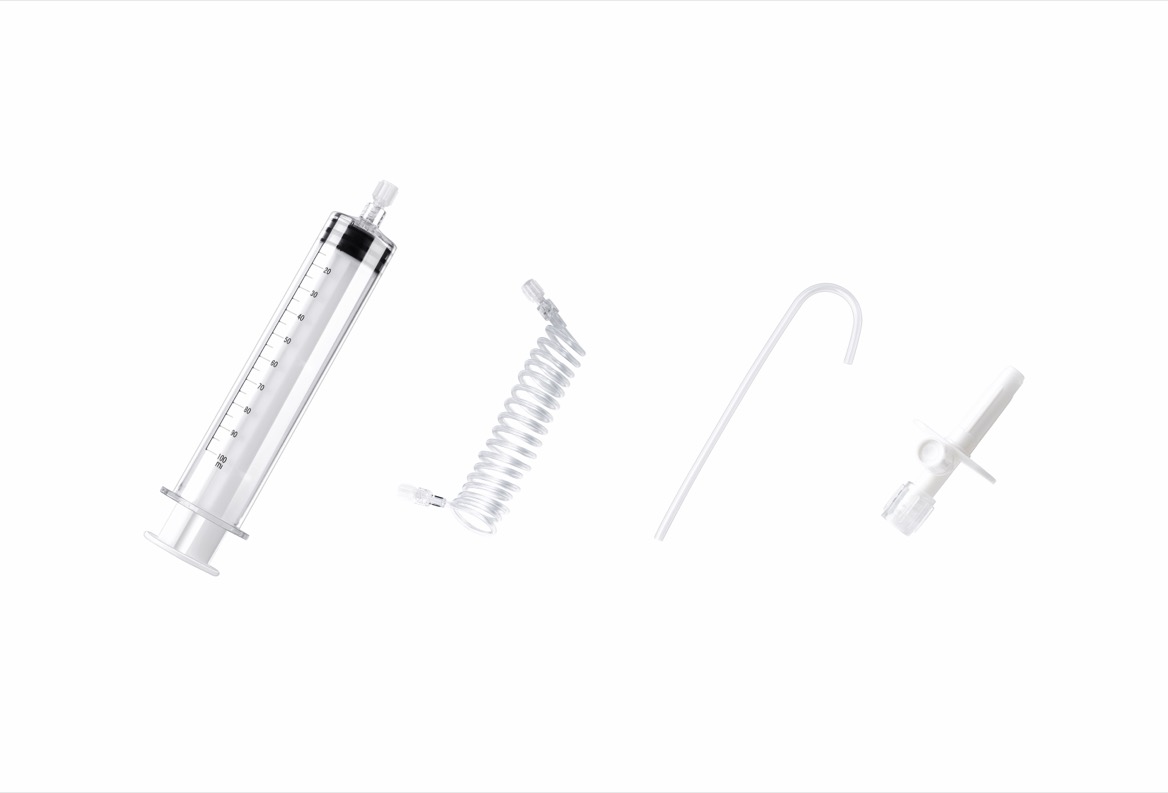
A conventional syringe contains a barrel and a plunger assembly. The stopper seals against the barrel wall, allowing plunger movement to change the volume inside.
Pushing the plunger forward reduces that volume and drives fluid outward. Pulling it backward increases the volume and lowers pressure inside the syringe, allowing fluid to enter through an available pathway.
Backward movement therefore requires:
- A design that permits withdrawal.
- A fluid pathway that allows inflow.
- A stopper that can move within its specified operating conditions.
- Correct mechanical engagement when an injector controls movement.
A syringe may support injection but resist aspiration if one of these conditions is missing. Forward movement alone does not prove that the complete system is functioning correctly.
Some syringes intentionally prevent backward movement after a defined stage of use.
Auto-disable and reuse-prevention designs may contain clips, locking features, or breakable plunger sections. Depending on the design, the mechanism activates during or after injection and prevents refilling.
This is a safety function—not necessarily a manufacturing fault.
However, "single-use" and "auto-disable" do not mean the same thing. A single-use syringe may still move in both directions mechanically, even though its labeling prohibits reuse.
Never attempt to unlock, modify, or defeat a reuse-prevention mechanism.
A check valve allows fluid to travel in its intended direction while restricting flow in the opposite direction.
If a syringe connects to tubing containing a suitably oriented check valve, forward injection may remain possible while backward fluid withdrawal is blocked. Pulling back can then feel unusually difficult because replacement fluid cannot enter through that route.
The effect depends on the entire circuit. A separate filling pathway may allow withdrawal even when the patient-side pathway prevents backflow.
Check the tubing diagram, valve orientation, and product instructions. Do not remove a valve simply to make aspiration possible; it may serve an essential protective function.
A closed stopcock, incorrectly positioned clamp, kinked filling tube, or blocked inlet can prevent fluid from entering during withdrawal.
Fluid properties also matter. More viscous liquids and narrower pathways can require greater pressure differences to achieve the same flow.
These conditions usually explain increased resistance, not a true mechanical lock.
The location of the restriction is important. A completely blocked single pathway would generally affect forward flow too. If forward flow remains normal, investigate directional valves, alternate pathways, and operating modes rather than automatically blaming an obstruction.
High-pressure injector systems add a mechanical interface between the drive piston and the disposable syringe.
Depending on the design, pushing against a stopper and capturing it for withdrawal are different mechanical conditions. Incorrect loading or incomplete engagement may therefore produce different behavior during advancement and retraction.
This possibility is system-specific, not a universal diagnosis.
Manufacturer workflows also differ. Bayer describes automatic plunger advance and retraction for its MEDRAD MRXperion system, while its Stellant training materials describe piston retraction after syringe removal.
Always distinguish injector piston movement from disposable stopper movement. Follow the exact loading and filling sequence for the relevant injector and syringe combination.
The stopper must seal tightly enough to prevent leakage while moving within the intended force range.
Two useful engineering terms describe movement:
- Break-loose force: the force required to initiate movement.
- Glide force: the force required to maintain movement.
Excessive friction, poor alignment, or damaged components can make movement difficult. A compromised plunger-to-stopper connection may also allow pushing without reliable pulling, depending on the construction.
These are possible failure mechanisms, not diagnoses established by feel alone. Unexpected resistance requires inspection and evaluation—not additional force.
| Observation | Possible explanation | Appropriate response |
|---|---|---|
| Plunger locks after the specified injection stage | Auto-disable or reuse-prevention feature | Follow disposal instructions |
| Injection works, but withdrawal through the connected line does not | Directional valve or separate filling route | Check the approved circuit diagram |
| Injector piston moves backward, but the stopper does not | Possible engagement or interface problem | Stop and follow the loading instructions |
| Plunger movement feels rough or uneven | Friction, misalignment, or component damage | Remove the affected disposable from service |
| Retraction fails with an alarm | Loading, operating-state, drive, or disposable issue | Follow the device-specific troubleshooting procedure |
These observations narrow the investigation. They do not replace the manufacturer's instructions or authorize continued patient use.
CT, MRI, and angiography injectors operate as integrated systems. The syringe, drive mechanism, tubing, connectors, fluid, and programmed settings interact.
A disposable that looks similar to another product is not automatically interchangeable.
A meaningful compatibility assessment should address:
- Injector model and applicable configuration.
- Syringe mounting geometry and stopper interface.
- Intended filling and retraction method.
- Labeled volume, pressure, and flow conditions.
- Tubing, connector, and valve configuration.
- Intended clinical application and applicable instructions.
A syringe that mounts successfully has passed only one practical check. That does not establish reliable filling, pressure performance, or safe system operation.
A high pressure rating does not establish low withdrawal resistance or correct piston engagement.
Pressure capability, seal integrity, operating force, and interface compatibility answer different engineering questions. Procurement teams should evaluate them separately.
Likewise, evidence from manually operated or prefilled syringes can clarify friction principles, but it should not be treated as validation of a high-pressure imaging disposable.
The first response is to stop, not pull harder.
The following framework is for trained personnel working within facility procedures and the applicable instructions for use.
If the system is connected to a patient, follow the injector's stop procedure and the facility's clinical protocol.
Do not repeatedly cycle the drive or manipulate pressurized connections to investigate the problem. Manage any residual pressure according to the equipment instructions.
Record the injector model, syringe reference, tubing configuration, and lot number.
Check whether the syringe permits withdrawal, requires a dedicated filling route, or incorporates a disabling mechanism.
Do not assume that a workflow used with a previous product applies to the current one.
Ask three questions:
1. Does the injector piston retract?
2. Does the syringe stopper follow?
3. Can fluid enter through the intended filling pathway?
A stationary piston suggests a different investigation from a retracting piston that leaves the stopper behind. A moving stopper with little incoming fluid points toward another set of possibilities.
Check visible seating, mounting orientation, tubing kinks, clamp positions, stopcock settings, and valve direction.
Do not add lubricant, use tools, heat the syringe, remove the stopper, or improvise an adapter.
Do not open a patient-connected circuit simply to test whether resistance disappears.
If resistance remains unexplained, remove the affected disposable from service and follow the replacement procedure.
Repeated problems with correctly specified replacement disposables warrant technical assessment of the injector and setup. A pattern is a reason to investigate—not proof that one particular component is responsible.
"The plunger will not pull back" describes a symptom, but it does not yet identify a root cause.
For manufacturers, distributors, and hospital engineering teams, a structured complaint record makes the investigation more useful.
Capture:
- Whether the problem occurred during loading, filling, priming, or another stage.
- Whether the piston, stopper, or both failed to retract.
- Syringe and tubing references, lot numbers, and expiration dates.
- Fluid identity and relevant preparation conditions.
- Alarm messages and visible damage.
- Whether other units showed the same behavior.
Where permitted, retain the affected components under appropriate contamination-control procedures.
This information helps distinguish a potential lot-related issue from incorrect selection, loading, fluid-path configuration, or equipment malfunction. It also avoids treating every complaint as an identical "stuck syringe" event.
When evaluating high-pressure injector consumables, ask for evidence tied to the specific product—not broad claims about the supplier.
Useful documentation includes:
1. A model-specific compatibility statement.
2. Current labeling and instructions for use.
3. Applicable pressure, leakage, connection, and functional performance information.
4. Packaging, sterilization, and shelf-life documentation.
5. Traceability and complaint-handling procedures.
6. Regulatory documentation relevant to the model and destination market.
Regulatory terminology also matters. ISO 13485 certification concerns the quality management system. CE marking and FDA 510(k) clearance have different regulatory meanings and scopes.
A 510(k) clearance should not be described as "FDA approval." None of these credentials, by itself, establishes compatibility with every injector.
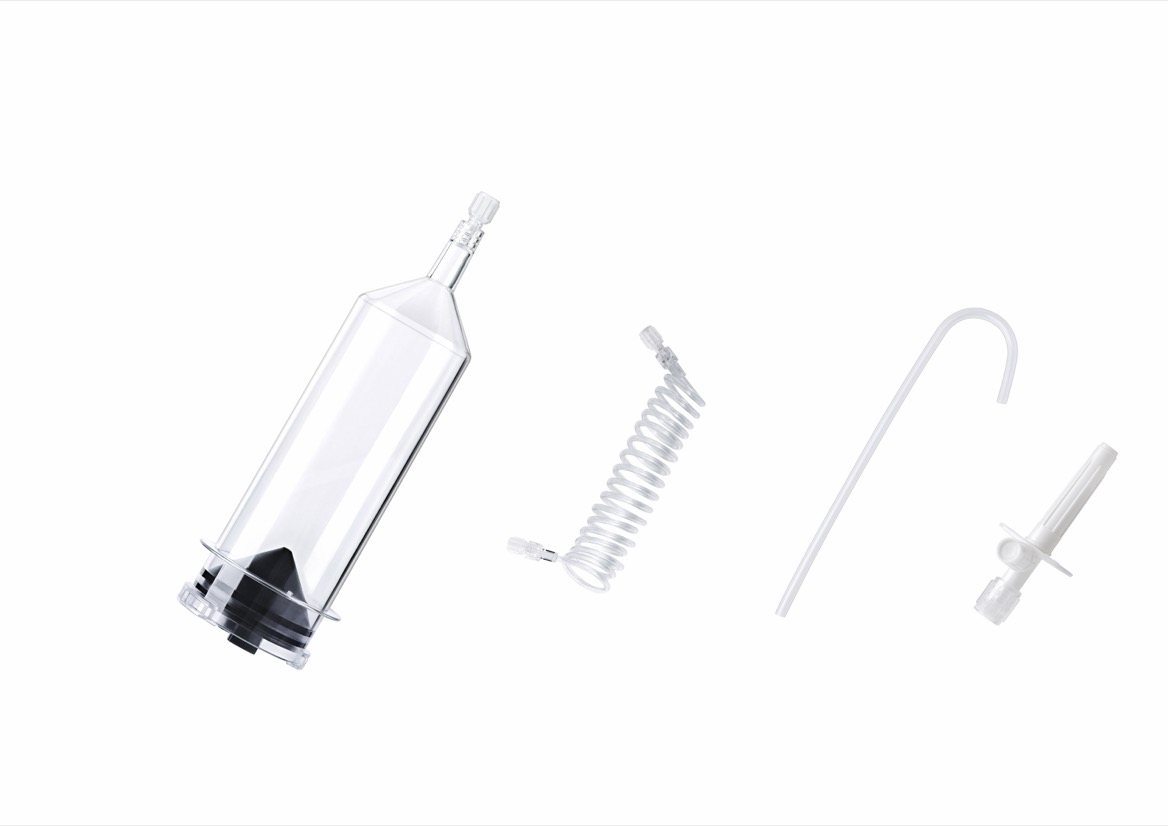
MAIWEI INC. develops and manufactures high-pressure injector syringes, connecting tubes, and related consumables for CT, MRI, and angiography applications.
According to the company information supplied for this article, MAIWEI serves hospitals, distributors, and OEM customers in more than 60 countries and regions and reports ISO 13485 certification, CE marking, and FDA 510(k) clearances. Applicable documents and product coverage should be confirmed during qualification.
Contact MAIWEI with your injector model, required syringe volume, tubing configuration, intended application, and destination market. Request model-specific compatibility information and relevant documentation before evaluating samples or placing an order.
For an existing retraction problem, include the product reference, lot number, workflow stage, and alarm details so the technical team can assess the actual configuration.
Sometimes. An activated reuse-prevention mechanism may intentionally block withdrawal. Unexpected resistance in a syringe intended for filling or aspiration requires investigation.
No. Single-use describes the intended use limitation. Auto-disable describes a mechanical feature. A syringe may be single-use without containing a locking mechanism.
Yes, when withdrawal requires reverse flow through that valve. Whether the syringe can still fill depends on the availability and configuration of another approved pathway.
No. Excessive force can damage components or cause sudden movement. Stop and follow the applicable instructions rather than attempting to overcome unexplained resistance.
Do not add lubricant unless the manufacturer explicitly permits it. Unapproved substances can compromise cleanliness, materials, sealing, and validated device performance.
No. Possible causes include disposable selection, loading, engagement, fluid-path configuration, and component problems. Technical evaluation is needed to identify the cause.
1. World Health Organization. *WHO Guideline on the Use of Safety-Engineered Syringes for Intramuscular, Intradermal and Subcutaneous Injections in Health Care Settings.* Explains reuse-prevention designs and mechanisms that prevent backward plunger movement. [Read the guideline]. [iris.who]
2. U.S. Food and Drug Administration. *Guidance on the Content of Premarket Notification [510(k)] Submissions for Piston Syringes.* Covers syringe definitions, labeling, device descriptions, and submission information. [Read the guidance]. [fda]
3. Bayer. *MEDRAD MRXperion MR Injection System.* Describes system-specific automatic plunger advance, retraction, filling, and priming features. [View the product information]. [radiologysolutions.bayer]
4. Bayer. *MEDRAD Stellant Video Tutorials.* Provides manufacturer workflow information, including syringe removal and automatic piston retraction. [View the tutorials]. [radiology.bayer]
5. ZwickRoell. *Determination of the Breakaway Force/Glide Force on Syringes.* Explains operating-force measurements and relevant syringe-testing approaches. [Read the technical overview]. [zwickroell]
6. World Health Organization. *WHO Best Practices for Injections and Related Procedures Toolkit.* Supports safe injection practices and distinctions concerning auto-disable devices. [Read the toolkit]. [iris.who]