


close
Choose Your Site
Global
Social Media
Views: 231 Author: Maiwei Biotech Publish Time: 2026-11-13 Origin: Site


Content Menu
● What Does a Contrast Injector Syringe Pressure Rating Mean?
● Why CT Contrast Injection Can Create Higher Pressure Demands
>> Iodinated Contrast Viscosity Increases Flow Resistance
>> CT Protocols May Require Rapid, Precisely Timed Delivery
>> Larger Syringes Create Different Mechanical Requirements
● Why MRI Syringe Pressure Requirements Are Different—but Not Always Lower
>> Tubing Configuration Matters in the MRI Environment
>> MR Safety Is Separate From Pressure Resistance
● Published CT and MRI Pressure Ratings: What Real Products Show
● The Engineering Behind Pressure: Flow, Diameter, and Length
● Three Common Specification Mistakes—and Better Alternatives
>> Mistake 1: Buying the Highest Pressure Rating Available
>> Mistake 2: Treating the Syringe as the Only Pressure-Limited Component
>> Mistake 3: Assuming a Pressure Alarm Explains the Cause
● A Practical Checklist for Hospitals, Distributors, and OEM Buyers
● What Manufacturers Should Validate Beyond Burst Strength
● Work With MAIWEI INC. on Model-Specific Consumable Selection
>> Do CT contrast injector syringes always need a higher pressure rating than MRI syringes?
>> Can a CT syringe replace an MRI syringe if its pressure rating is higher?
>> Is 350 psi the standard pressure for every CT syringe?
>> Does a higher pressure rating improve image quality?
>> Why can an MRI injection reach a pressure limit despite using little contrast?
>> Can an injector pressure limit prevent every extravasation event?
CT contrast injector syringes and MRI syringes may require different pressure specifications because contrast viscosity, injection flow rate, tubing configuration, and injector design create different operating demands. However, the distinction is not absolute: some CT and MRI consumables share the same pressure rating.
From our perspective as an imaging-consumables manufacturer, the most important question is not simply whether a syringe is intended for CT or MRI. It is whether the complete injection system can deliver the prescribed contrast bolus within its validated operating limits.
The guiding principle is compatibility: syringe pressure ratings must match the specific injector, disposable configuration, and intended application—not a general assumption about imaging modality.
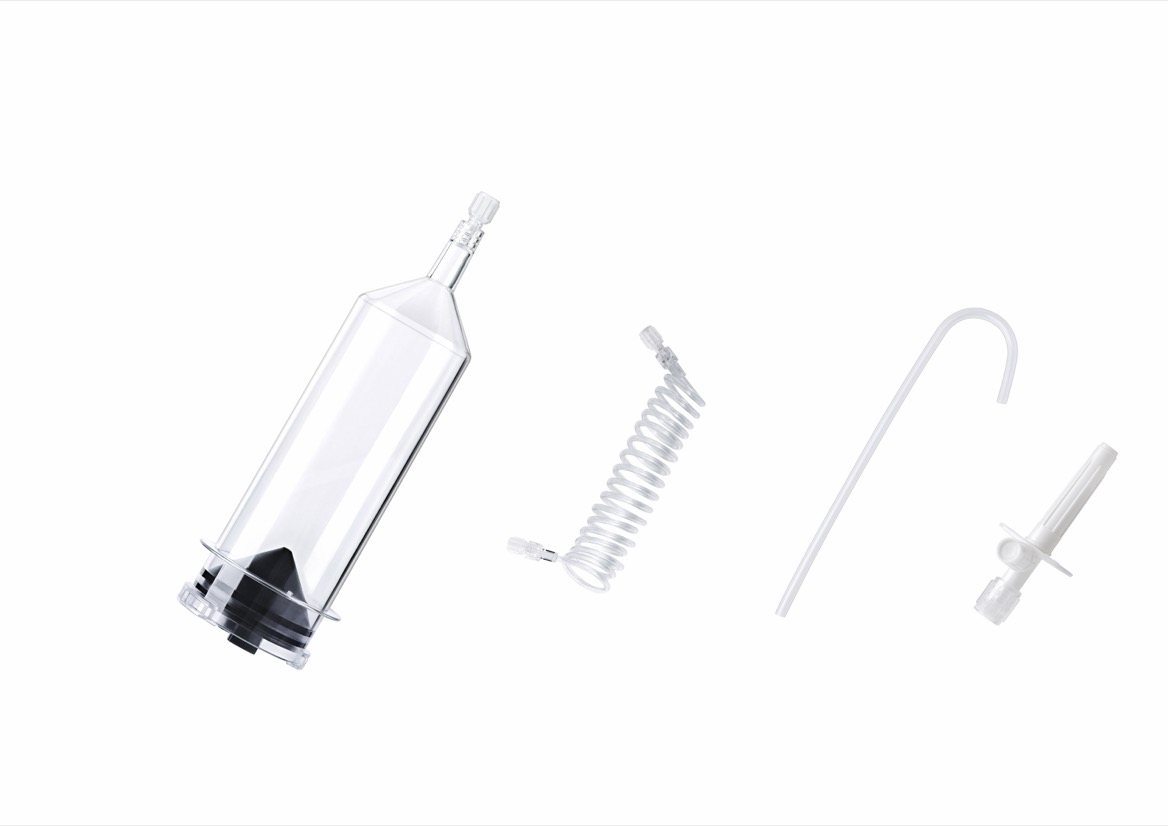
A syringe's labeled maximum pressure defines an operating limit under the manufacturer's specified conditions. It does not describe the pressure required for every examination.
Three concepts need separating:
| Pressure term | Meaning | Practical significance |
|---|---|---|
| Maximum operating pressure | The labeled pressure limit for the consumable | Must not be exceeded during use |
| Injector pressure-limit setting | The configured threshold used by the injector's control system | Must follow the applicable instructions and approved protocol |
| Burst pressure | Pressure at which a specimen fails under defined test conditions | Is not a permissible clinical operating pressure |
An injector normally attempts to deliver a programmed flow rate. The pressure needed to achieve that flow depends on resistance throughout the fluid pathway.
Consequently, a 350 psi syringe does not continuously inject at 350 psi. Nor does its rating authorize using that pressure with a lower-rated catheter or connecting tube.
CT commonly uses iodinated contrast media. Their viscosity varies with formulation, concentration, and temperature.
For example, one iohexol prescribing information document lists these absolute viscosity values:
| Iohexol concentration | Viscosity at 20°C | Viscosity at 37°C |
|---|---|---|
| 300 mg iodine/mL | 11.48 cP | 6.05 cP |
| 350 mg iodine/mL | 21.48 cP | 12.16 cP |
These figures illustrate why the same injection setup can behave differently when contrast concentration or temperature changes.
They do not establish a universal comparison between every CT and MRI contrast agent. Procurement teams should compare the actual formulations used by their customers rather than assume all MRI agents have low viscosity.
Any warming practice must follow the contrast manufacturer's instructions and the facility's procedures.
CT angiography and other timing-sensitive examinations depend on delivering contrast in coordination with image acquisition.
When the prescribed flow increases, the injection system generally needs more pressure to overcome the same downstream resistance. If the injector reaches its pressure limit, its response depends on the model and operating mode; the intended flow profile may not be maintained.
This makes pressure capability relevant to bolus delivery—not merely resistance to syringe breakage.
Nevertheless, faster delivery is not automatically better. The clinical team determines the appropriate flow, volume, and timing for the examination and patient.
CT disposable systems may use larger syringes than some MRI systems. Syringe capacity alone does not determine pressure capability, but barrel geometry affects mechanical loading.
At a given internal pressure, a larger piston area requires greater driving force. Barrel dimensions, wall thickness, material properties, and retention features must therefore work together.
This is why two syringes with similar appearance cannot be considered interchangeable without model-specific validation.
MRI contrast delivery has its own demands. Dynamic examinations can require accurate timing, reproducible flow, and a coordinated saline flush.
Lower contrast volume does not necessarily mean low injection pressure. A relatively small bolus passing through a restrictive catheter and long extension line can still create substantial resistance.
MRI also adds requirements that a pressure number cannot describe.
MRI-room layouts and injector positioning can require particular extension-line configurations.
Longer tubing generally increases resistance when other factors remain unchanged. Internal diameter also matters: a narrow line can create a significant pressure drop even when the syringe itself has ample pressure capacity.
When comparing MRI high-pressure syringes, buyers should therefore examine the complete kit:
- Syringe capacity and geometry.
- Tubing length and internal diameter.
- Connector and check-valve configuration.
- Labeled pressure limits.
- Specified injector compatibility.
A pressure rating without these details provides an incomplete picture.
Pressure resistance does not establish suitability for the magnetic resonance environment.
Applicable devices require appropriate MR safety assessment and labeling. MR Safe, MR Conditional, and MR Unsafe describe different safety statuses; they are not interchangeable marketing expressions.
A high-pressure CT disposable is not automatically suitable for MRI simply because it fits a connector. Likewise, an MRI-compatible product still needs an adequate pressure rating for its intended injection configuration.
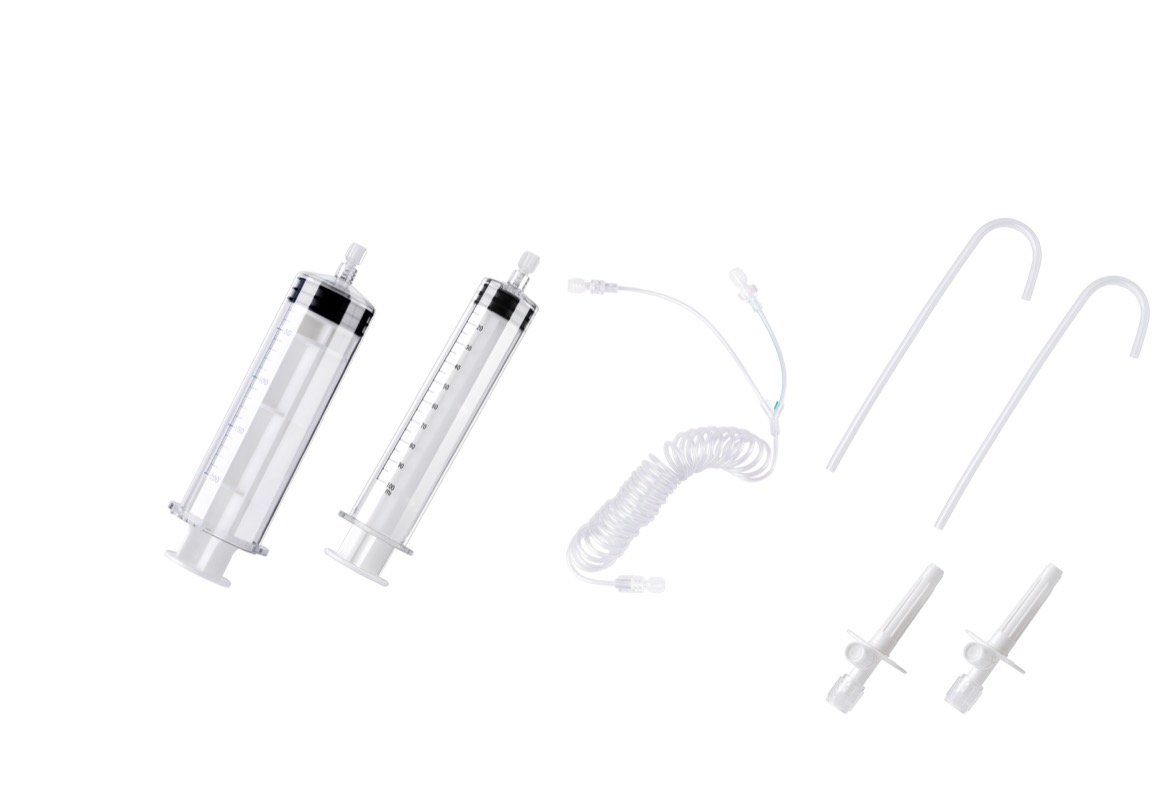
Manufacturer documentation demonstrates why universal rules are unreliable.
The following examples come from a Guerbet US consumables brochure issued in June 2024:
| Documented consumable | Listed capacity or configuration | Listed maximum pressure |
|---|---|---|
| OptiVantage/OptiOne single CT syringe | 200 mL | 350 psi |
| OptiStar Elite single MR syringe | 60 mL | 300 psi |
| CT/MRI coiled extension tubing | 150 cm | 350 psi |
| Illumena Néo angiography syringe | 150 mL or 200 mL | 1,200 psi |
These are product-specific examples, not recommended clinical settings or universal modality limits.
They show that CT and MRI syringe ratings can differ within a manufacturer's portfolio, while some connecting tubes serve both applications at the same rating.
They also show why angiography consumables must remain a separate category. A 1,200 psi angiography syringe does not make a CT or MRI fluid pathway suitable for that pressure.
Always confirm the current, region-specific instructions for the exact reference number. Brochure examples cannot replace current labeling.
A useful starting point is the relationship described by Poiseuille's law. For ideal laminar flow through a rigid circular tube:
ΔP=8μLQ/πr4
Here, pressure drop increases with viscosity, tubing length, and flow rate. It decreases strongly as internal radius increases.
Real injection systems also include connectors, valves, flexible tubing, and changing flow conditions. The equation therefore explains direction and sensitivity; it does not replace testing.
Imagine two otherwise identical straight tubes, with one having twice the length. In the simplified model, maintaining the same flow requires twice the pressure drop across that tube.
Now imagine reducing internal radius by 20%. The same model predicts approximately 2.44 times the pressure drop.
These are engineering illustrations, not patient-specific predictions. Their value is practical: selecting a suitable tubing diameter may matter more than purchasing a syringe with a higher pressure number.
From a manufacturing perspective, pressure performance is a system-design issue, not an isolated barrel-strength feature.
A higher rating does not prove correct fit, accurate delivery, or reliable injector recognition.
A syringe with inappropriate dimensions may create retention, sealing, or delivery problems despite a strong barrel.
Better alternative: request documented compatibility with the exact injector model and disposable configuration.
The fluid pathway can include a syringe, Y-tube, extension line, valve, connector, and vascular-access device.
Its allowable use cannot exceed the applicable limits of its components. However, selecting the lowest printed number is not a complete validation method: the injector instructions may impose additional configuration requirements.
Better alternative: review every component's labeling and the injector's permitted setup together.
An unexpected pressure increase may reflect restrictions, configuration changes, or other problems. Pressure information alone does not establish a diagnosis or exclude extravasation.
Better alternative: have qualified personnel assess the patient and injection pathway according to local procedures. Never raise a pressure limit simply to overcome an unexplained alarm.
Before approving CT contrast injector syringes or MRI syringe kits, use this six-step review:
1. Identify the exact injector. Record its manufacturer, model, and applicable disposable reference numbers.
2. Define the intended application. Specify modality, syringe capacity, contrast formulation, and required tubing configuration.
3. Review pressure limits. Check the syringe, tubing, connectors, valves, and vascular-access requirements.
4. Confirm compatibility evidence. Request relevant fit, retention, leakage, and delivery-performance documentation.
5. Verify market documentation. Review current certificates, applicable device authorizations, labeling, and traceability information.
6. Evaluate representative samples. Conduct an institutionally approved assessment before routine adoption; any clinical evaluation requires appropriate authorization.
For OEM projects, document acceptance criteria before sample approval. A statement such as "compatible with major injectors" is less useful than a controlled compatibility matrix identifying individual models and kit configurations.
A credible high-pressure syringe evaluation should address more than whether the barrel survives a single pressure test.
Depending on the product and intended use, relevant evidence may include:
- Leakage resistance under specified conditions.
- Piston sealing and movement.
- Injector mounting and syringe retention.
- Delivered-volume and flow performance.
- Tubing and connector integrity.
- Sterilization validation and packaging integrity.
- Performance through the labeled shelf life.
Buyers should ask how tested samples represent the finished, sterilized product and its claimed storage life.
Regulatory terminology also matters. ISO 13485 concerns a medical-device quality management system. CE marking and FDA 510(k) clearance have different regulatory meanings and scopes.
A 510(k) clearance is not "FDA approval," and no certificate alone demonstrates compatibility with every injector.
At MAIWEI INC., our focus is developing and manufacturing CT, MRI, and angiography injector consumables, including high-pressure syringes, connecting tubes, and related accessories.
Our company profile describes service to hospitals, distributors, and OEM customers across more than 60 countries and regions, supported by ISO 13485 certification and applicable CE and FDA 510(k) documentation. Buyers should confirm the scope and validity of documentation for each proposed product and destination market.
Send MAIWEI INC. your injector model, required syringe capacity, tubing configuration, destination market, and OEM requirements. Request a model-specific product recommendation, applicable regulatory documents, and samples for an authorized compatibility evaluation.
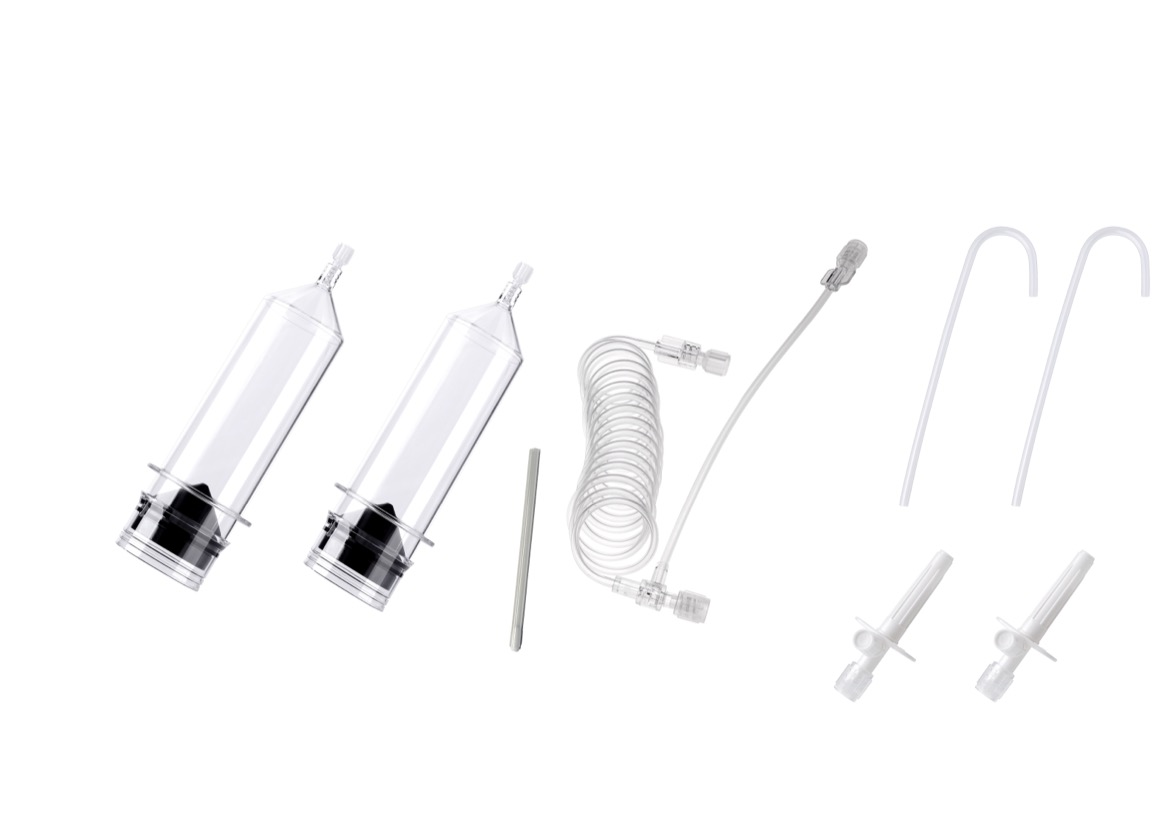
No. Ratings depend on the specific injector and disposable design. Some documented CT and MRI products have different limits, while certain connecting tubes are labeled for both modalities at the same pressure.
Not on pressure rating alone. Mechanical fit, injector operation, fluid-path configuration, intended use, and applicable MR safety requirements must also be satisfied.
No. It is a rating used by particular products, not a universal specification. Follow the current labeling for the exact syringe and injector.
Not by itself. An adequate rating supports intended operation, but image quality also depends on the prescribed contrast protocol, delivery performance, scan timing, and patient factors.
Total volume does not determine instantaneous resistance. Contrast viscosity, programmed flow, tubing dimensions, connectors, and vascular access all influence the pressure required during delivery.
No. Pressure limiting does not replace assessment of vascular access or patient monitoring. Extravasation can still occur, and suspected events require evaluation under the facility's clinical procedures.
1. American College of Radiology. "Manual on Contrast Media." Clinical reference covering contrast injection, extravasation, warming, and contrast-agent specifications. [cs.acr]
2. Guerbet. "Protect Your Injector: Essential Consumables Verified by Guerbet." US brochure, document GU06240083, June 2024. Source for the product-specific CT, MRI, tubing, and angiography pressure examples. [guerbet]
3. Guerbet Australia. "OptiStar Elite & Its Dedicated Disposables." Product information listing MRI consumables and shared CT/MRI extension tubing. [australia.guerbet]
4. Amneal Pharmaceuticals Private Limited. "Iohexol Injection: Full Prescribing Information." DailyMed, revised June 2026, Table 21. Source for concentration- and temperature-specific viscosity values. [dailymed.nlm.nih]
5. US Food and Drug Administration. "Testing and Labeling Medical Devices for Safety in the Magnetic Resonance (MR) Environment." Guidance issued October 10, 2023. Source for MR safety assessment and labeling distinctions. [fda]
6. US Food and Drug Administration. "Premarket Notification 510(k)." Explanation of substantial equivalence and device clearance. [fda]