


close
Choose Your Site
Global
Social Media
Views: 277 Author: Maiwei Biotech Publish Time: 2026-10-07 Origin: Site


Content Menu
● Why Syringe Connections Leak
>> Incomplete Seating or Cross-Threading
>> Excessive Tightening or Connector Damage
>> Incompatible Syringes and Tubing
>> Pressure and Flow Conditions
>> Tubing Tension and Side Loading
>> Identify the Actual Leak Location
>> Stop Before Troubleshooting
>> Leakage Versus Extravasation
>> A Reported Clinical Example
● Prevent Recurrence Through Validation
>> Pre-Injection Connection Checks
>> Connector Standards Are Not Enough
>> Build a Useful Complaint Record
● Discuss Your Application With MAIWEI
>> Why Does Leakage Start Under Pressure?
>> Can Tightening Stop a Leak?
>> Are All Luer-Lock Tubes Suitable?
>> Does a Saline Check Guarantee Safety?
>> Is Leakage Always Operator Error?
>> Should a Leaking Syringe Be Reused?
A contrast injector syringe leaks at the connection when the syringe outlet and connecting tubing fail to maintain a secure seal under injection pressure. Possible causes include incomplete assembly, cross-threading, damaged connectors, incompatible components, excessive mechanical stress, or operating conditions outside the disposable set's specifications.
For CT, MRI, and angiography teams, a high-pressure syringe connection leak is more than a housekeeping problem. It can interrupt contrast delivery, disrupt scan timing, compromise the fluid pathway, and require reassessment before the examination continues.
From a manufacturing perspective, the important question is not simply, "Was the connection tight?" It is, "Was the complete fluid-delivery system correctly assembled, undamaged, compatible, and suitable for the intended injection?"
This guide explains how to investigate the problem without assuming that every leak is operator error—or that tightening the connector harder will solve it.
Safety: This article supports professional troubleshooting and procurement decisions. It does not replace device instructions, institutional procedures, or clinical judgment.
A connector can feel attached without being properly seated. Misalignment during assembly may prevent the mating surfaces from forming an effective seal.
With threaded connections, cross-threading can create resistance before the connector reaches its intended position. The operator may interpret that resistance as secure engagement.
Alignment matters as much as tightness. Follow the assembly method specified for the syringe and tubing, and do not force a connection that engages unevenly.
A connection that seems acceptable during filling may leak once the injector applies pressure. Therefore, appearance alone cannot establish that assembly is correct.
More force is not automatically safer. Depending on connector design and materials, excessive tightening may damage threads, distort mating surfaces, or contribute to cracking.
Damage can also originate during transport, storage, handling, or assembly. Small defects may be difficult to see before fluid escapes.
Inspection should include the syringe outlet, tubing connector, locking mechanism, and nearby bonded joints. Look for cracks, deformation, damaged threads, or other abnormalities.
Do not assign a universal tightening torque or number of turns to all contrast injector consumables. Different connection designs require different handling instructions.
A connector that physically attaches is not necessarily validated for the intended application.
Compatibility involves more than connector shape. It includes the injector model, syringe mounting interface, outlet design, tubing configuration, pressure limits, and intended use.
Compatibility must be established for the specific combination—not inferred from a familiar connector or a broad "universal" description.
This is particularly important when combining syringes, extension tubing, adapters, valves, and patient-access components from different suppliers. Every added interface introduces another component that requires evaluation.
A contrast injector syringe connection leak may become apparent only during a particular injection phase.
Required pressure depends on the complete fluid pathway and operating conditions. Flow rate, fluid properties, tubing dimensions, and downstream resistance all influence system behavior.
Pressure limits should come from the applicable device labeling. A syringe's rating does not automatically establish the rating of an attached tube, valve, or catheter.
Never increase a pressure limit to overcome unexplained resistance. Likewise, lowering the flow rate is not an acceptable repair for a damaged or leaking component.
Mechanical stress can affect a connection even when the initial assembly was correct.
A tubing run stretched across the scanner table may pull on the syringe outlet. Twisted tubing or unsupported connectors can also place sideways forces on the interface.
Routing should allow the intended patient and table movement without pulling, kinking, or loading the connection.
Avoid solving a routing problem by adding unverified adapters or unnecessarily long tubing. Changes to the fluid pathway should remain within the validated configuration.
Fluid around the syringe does not prove that the syringe outlet is the source. Escaping liquid can travel along tubing or collect beneath another component.
Distinguish leakage at the syringe-to-tubing interface from a crack in the connector body, separation at a bonded joint, or leakage farther downstream.
Location determines what needs investigation. Repeatedly replacing the syringe will not solve a defect in the tubing assembly.
| Observation | Possible explanation | Appropriate investigation |
|---|---|---|
| Moisture at the mating interface | Incomplete seating, damaged sealing surfaces, or incompatibility | Review assembly and the approved component combination |
| Fluid emerging from the connector body | Crack or deformation | Remove the affected disposable from service |
| Leakage at the tubing attachment | Bonded-joint or tubing damage | Preserve the assembly for investigation when appropriate |
| Leakage associated with movement | Tubing tension or side loading | Review routing and support |
| Leakage during a higher-demand phase | Marginal seal, damage, or unsuitable operating conditions | Review pressure data, settings, and component limits |
| Pain or swelling at the access site | Possible extravasation | Stop injection and obtain clinical assessment |
These observations guide investigation; they do not establish a root cause by themselves.
When leakage is observed during injection, the first priority is safe interruption—not an improvised repair.
1. Stop the injection using the device's prescribed controls.
2. Assess the patient and vascular-access site.
3. Notify the appropriate clinical staff according to institutional procedures.
4. Follow device instructions for safely managing residual pressure before manipulating connections.
5. Remove damaged or suspect disposables from service.
6. Restore the system using the approved replacement, assembly, and priming procedure.
7. Resume only after the clinical team confirms that proceeding is appropriate.
Never attempt to repair a leaking connection with tape, adhesive, extra tools, or an unapproved adapter.
Do not assume the programmed contrast volume reached the patient. The clinical team should review the interrupted injection and determine whether changes to imaging or contrast administration are necessary.
A connection leak is fluid escaping from equipment. Extravasation is fluid escaping from the vascular pathway into surrounding tissue.
The two problems are different, and one should not distract staff from checking for the other.
Assessment is essential when the patient reports pain, swelling, or unusual sensations, or when there is concern about vascular access.
A visible equipment leak does not rule out a separate patient-access problem. Follow the institution's extravasation pathway whenever it is suspected.
A publicly available malfunction report describes an event on March 27, 2024, in which connector tubing reportedly cracked during a CT injector saline flush. Saline sprayed from the syringe/tubing connection.
The report illustrates why a leak should not automatically be attributed to insufficient tightening.
Caution: An individual report does not establish failure frequency, prove a general design defect, or support comparisons between manufacturers.
Its practical lesson is narrower: inspect the connector body and tubing assembly, not just the engagement between components.
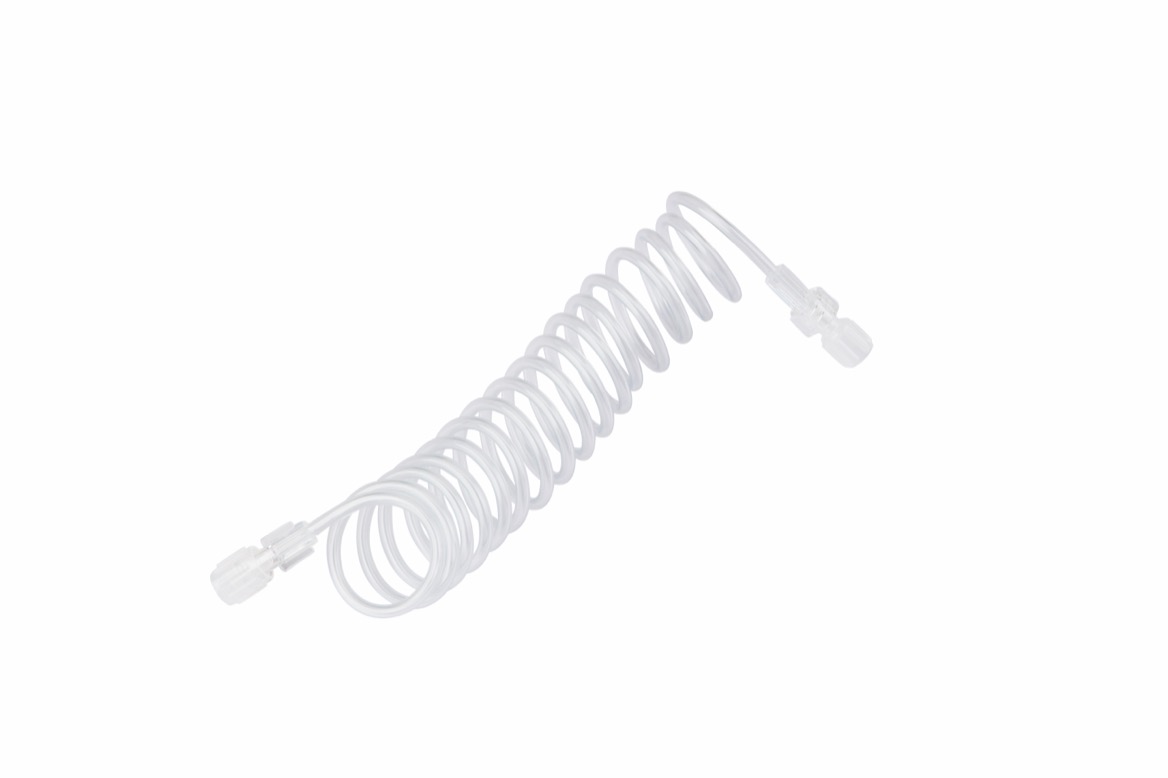
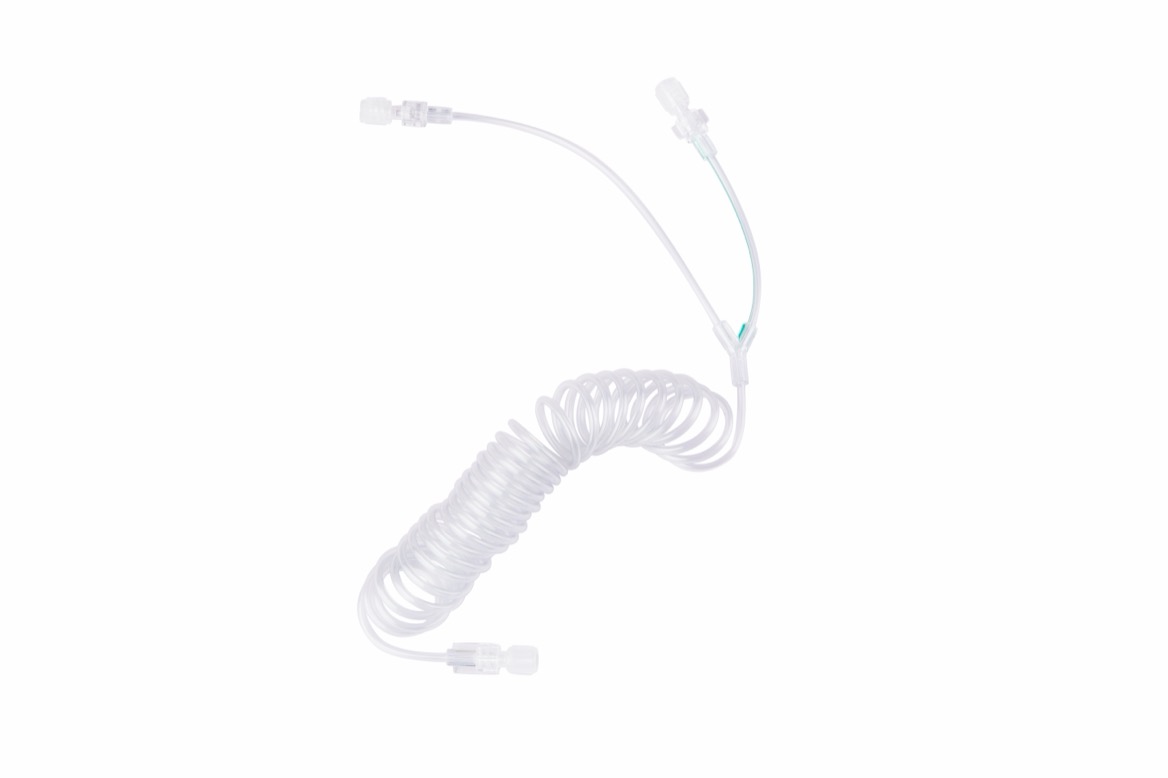
A repeatable preparation process is more useful than relying on memory or an instruction to "tighten everything."
The following checks should be adapted to the relevant device instructions and local protocol:
- Identity: Confirm the injector, syringe, and tubing product codes.
- Packaging: Check sterile-barrier integrity, expiry, and storage conditions.
- Condition: Inspect accessible connectors and tubing for visible damage.
- Assembly: Align and secure each interface using the prescribed method.
- Priming: Remove air according to the approved procedure.
- Routing: Prevent kinks, twisting, and traction during anticipated movement.
- Settings: Verify that the intended protocol respects applicable component limits.
- Access: Confirm vascular-access suitability and patency under local procedures.
An approved saline check can help identify problems, but it does not guarantee performance under every subsequent injection condition.
Different fluids and injection phases may place different demands on the system. Avoid undocumented pressure challenges or improvised testing on a patient-connected assembly.
ISO 80369-7 addresses dimensions and functional performance requirements for small-bore connectors used in intravascular and hypodermic applications.
However, conformity to a connector standard should not be treated as proof that a complete disposable set supports every high-pressure imaging protocol.
Validation must address the finished assembly and its intended use.
A connector, tubing bond, valve, and syringe may each contribute a different limitation. The complete fluid pathway needs evidence appropriate to the claimed configuration.
Manufacturer evaluation should distinguish operating-pressure limits, leakage performance, connection strength, and burst testing. These are related concepts, but they are not interchangeable purchasing specifications.
For hospitals, distributors, and OEM customers, meaningful supplier evaluation starts with product-specific documentation.
| Evaluation area | Evidence to request | Why it matters |
|---|---|---|
| Injector compatibility | Exact supported models and product codes | Prevents assumptions based on appearance |
| Operating limits | Labeled pressure and flow restrictions | Defines permitted use |
| Assembly performance | Relevant leakage, strength, and pressure-test evidence | Evaluates the finished fluid pathway |
| Instructions | Clear assembly, priming, and replacement guidance | Supports consistent handling |
| Sterility and shelf life | Applicable validation and labeling | Supports safe supply management |
| Traceability | Lot identification and complaint procedures | Enables investigation |
| Regulatory status | Documents covering the specific device and market | Prevents overgeneralized claims |
Documentation should match the actual item being purchased. A certificate for one product family does not automatically cover every configuration.
ISO 13485 certification concerns the quality-management system. CE marking and FDA 510(k) clearance have different regulatory meanings and should be described within their applicable scope.
Repeated high-pressure syringe connection leaks deserve a structured investigation rather than repeated reminders to tighten the connector.
Record the injector model, disposable product codes, lot numbers, injection phase, programmed settings, available pressure information, and exact leak location.
Evidence may also include photographs, packaging details, and a description of tubing position. Preserve suspect devices only under approved infection-control and handling procedures.
Review whether events cluster around a product lot, injector, component combination, or workflow. Such patterns can guide further investigation without prematurely blaming either the operator or the supplier.
MAIWEI INC. develops and manufactures high-pressure injector syringes, connecting tubing, and related consumables for CT, MRI, and angiography applications.
According to company-provided information, MAIWEI serves hospitals, distributors, and OEM customers across more than 60 countries and regions, with an ISO 13485-certified quality system and applicable CE-marked and FDA 510(k)-cleared products.
Contact MAIWEI with your injector model, required syringe configuration, intended injection conditions, and target market. Request a product-specific compatibility review, technical documentation, and applicable regulatory records before selecting a disposable set.
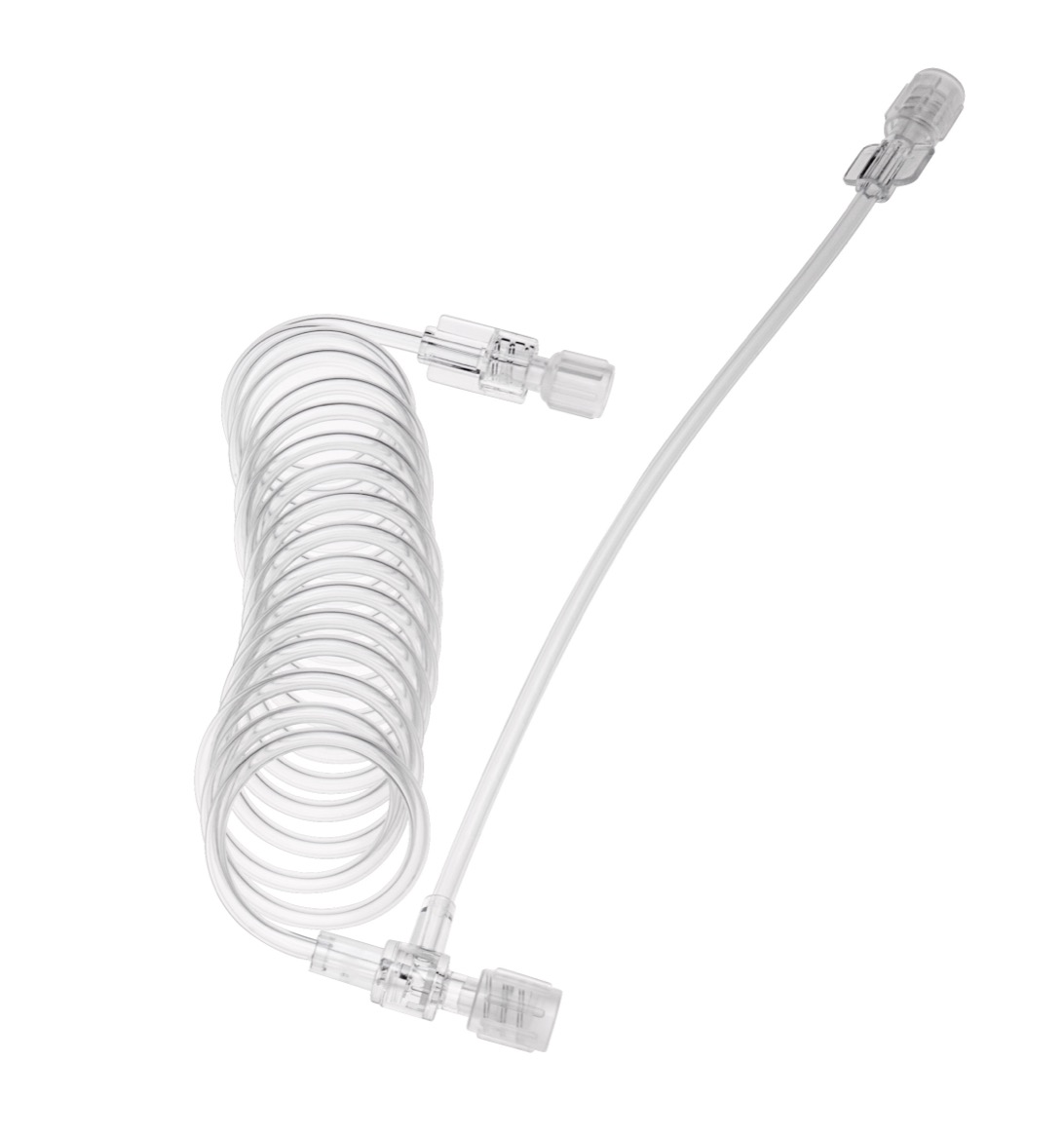
A marginal seal or damaged component may not leak visibly during filling or low-demand operation. Injection pressure can reveal the problem. The timing provides a useful clue, but it does not prove whether assembly, damage, or compatibility caused the failure.
Incorrect seating may contribute to leakage, but additional tightening is not a universal solution. Stop injection first and follow the relevant instructions. Replace damaged or suspect components rather than forcing the connector.
No. A familiar connection does not establish suitability for power injection. Confirm the exact tubing's intended use, operating limits, and compatibility with the complete system.
No. A satisfactory check provides information about the system under those conditions. It does not eliminate every possible failure during later injection phases. Continue following device instructions and monitoring requirements.
No. Assembly is one possible cause. Component damage, unsuitable combinations, tubing stress, and operating conditions also require investigation. A fair review considers both workflow and device evidence.
Do not reuse a suspect single-use component as a workaround. Follow labeling and institutional procedures for replacement, disposal, and incident investigation. Safe continuation requires reassessment of the complete system.
- U.S. Food and Drug Administration. *Intravascular Administration Sets: Premarket Notification Submissions [510(k)].* Issued July 11, 2008. Supports discussion of mechanical specifications, connector performance, wet and dry testing, simulated-use forces, labeling, and compatibility evaluation. This is a general administration-set guidance, not product-specific authorization for a contrast injector configuration. [Read the guidance]. [fda]
- U.S. Food and Drug Administration. *Recognized Consensus Standards: ISO 80369-7, Second Edition, 2021-05—Small-bore connectors for liquids and gases in healthcare applications, Part 7.* Supports the description of intravascular connector dimensions and functional requirements. [View the standards record]. [accessdata.fda]
- UCSF Department of Radiology and Biomedical Imaging. *CT and X-ray Contrast Guidelines Information.* Page includes an update dated August 22, 2025. Supports vascular-access checks, saline-flush assessment, monitoring, and stopping when resistance, pain, or extravasation concerns arise. [Read the clinical guidance]. [radiology.ucsf]
- Roditi G, et al. *Intravenous contrast medium extravasation: systematic review and updated ESUR Contrast Media Safety Committee Guidelines.* Published in 2022. Supports the distinction between equipment leakage and extravasation, patient assessment, and standardized injector preparation. [Read the full article]. [pmc.ncbi.nlm.nih]
- U.S. Food and Drug Administration, MAUDE database. *MEDRAD Stellant FLEX CT Connector Tubing—Malfunction Report MW5153917.* Event dated March 27, 2024; report received April 16, 2024. Describes reported cracking and saline leakage during a preflush. Used as an individual reported example, not as incidence or comparative-performance evidence. [View the event report]. [accessdata.fda]
- MAIWEI INC. Company description supplied for this article. Source of the product categories, customer groups, export reach, and stated certification and clearance information. No company website, certificate numbers, or device-specific clearance records were supplied; these claims require documentary confirmation before publication.[MAIWEI INC.]