


close
Choose Your Site
Global
Social Media
Views: 294 Author: Maiwei Biotech Publish Time: 2026-10-10 Origin: Site


Content Menu
● CT Injector Syringe Integrity vs. Injection Pressure: What Is the Difference?
● Why Does CT Injection Pressure Increase?
>> Higher Flow Rates Require More Driving Pressure
>> Narrower or Longer Fluid Pathways Increase Resistance
>> Contrast Viscosity Changes Operating Conditions
● Six Reasons a CT Injector Syringe May Leak Under Pressure
>> 1. An Insecure or Damaged Outlet Connection
>> 2. A Compromised Plunger Seal
>> 3. Barrel or Syringe-Tip Damage
>> 4. Incorrect Injector Compatibility
>> 5. An Unsuitable Component Elsewhere in the Pathway
>> 6. Operation Outside Labeled Conditions
● Syringe Leakage vs. Contrast Extravasation
● What to Do When a CT Injector Syringe Leaks
>> Step 2: Follow the Injector's Safe Handling Procedure
>> Step 3: Locate the First Observable Leak Point
>> Step 4: Replace Affected Consumables as Directed
>> Step 5: Document and Escalate
● A Practical Root-Cause Matrix for Recurring Leaks
● Industry Evidence: Why the Entire Assembly Matters
● How to Evaluate High-Pressure Syringes and Connecting Tubes
>> Ask for Product-Specific Compatibility
>> Review Operating Conditions, Not Just a Pressure Number
>> Distinguish Quality Systems from Product Authorization
● How MAIWEI INC. Supports Consumable Selection
>> 1. Does increasing pressure always cause a CT injector syringe to leak?
>> 2. Can a syringe leak below its labeled pressure rating?
>> 3. Should the pressure limit be increased after an alarm?
>> 4. Does a successful saline flush rule out later problems?
>> 5. Can normal injector pressure rule out extravasation?
>> 6. What should distributors request before recommending a replacement syringe?
A CT injector syringe may leak when pressure increases because rising hydraulic load exposes a weak seal, damaged barrel, insecure connection, incompatible component, or incorrectly assembled fluid pathway. Increased resistance—from kinked tubing, a restricted catheter, or viscous contrast—can intensify that load. However, pressure alone does not identify the cause, and fluid near the injector does not necessarily mean the syringe has failed.
From a manufacturing and quality perspective, I would separate two questions: why did pressure rise, and where did containment fail? That distinction helps hospitals investigate incidents and helps purchasing teams select compatible consumables.
This article compares CT injector syringe integrity with injection pressure, explains common failure patterns, and provides a practical investigation framework. It supports trained professionals; device instructions and institutional protocols remain controlling.
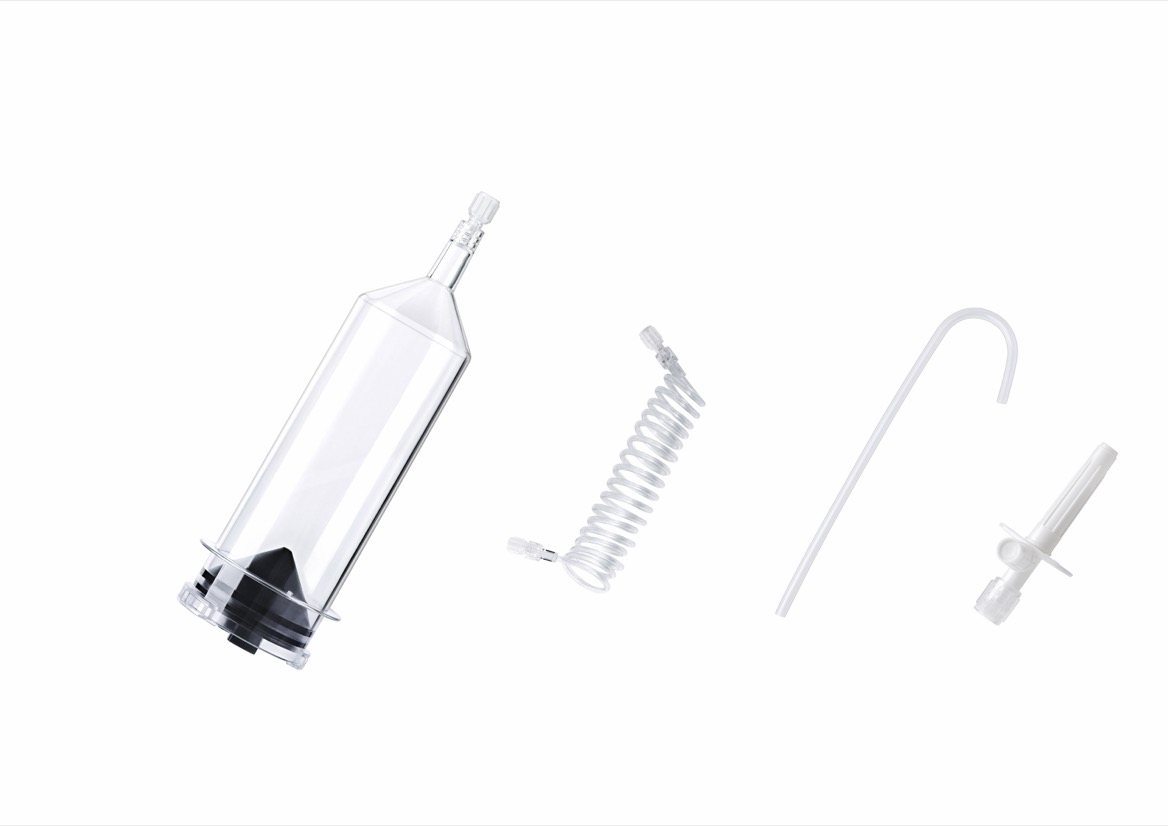
The syringe contains and delivers contrast. Injection pressure is the hydraulic force required to move that contrast through the connected pathway at the intended flow rate.
These are related, but they are not interchangeable measures of quality or safety.
| Factor | CT injector syringe integrity | Injection pressure |
|---|---|---|
| Main concern | Whether the syringe and interfaces contain fluid | How much resistance the injector must overcome |
| Influencing factors | Material condition, seal design, assembly, compatibility | Flow rate, viscosity, tubing geometry, catheter resistance |
| Typical warning | Fluid at the barrel, plunger, or outlet | Rising pressure, pressure limiting, interrupted delivery |
| Investigation priority | Locate the failed containment point | Identify restrictions and review operating conditions |
| Important limitation | A syringe cannot compensate for an unsuitable pathway | A pressure reading cannot independently locate a leak |
A properly selected syringe is intended to maintain containment within its labeled operating conditions. Nevertheless, the complete assembly matters: tubing, connectors, valves, and vascular access devices must also be suitable for power injection.
Delivering contrast faster generally requires more pressure through an unchanged fluid pathway. This becomes especially relevant when a protocol demands rapid contrast delivery.
However, increasing the pressure limit is not a general solution to resistance. A pressure alarm may indicate a restriction, unsuitable component, or vascular access problem requiring investigation.
Tubing length and internal diameter influence resistance. So do catheter dimensions and additional components in the pathway.
A kink, closed clamp, incorrectly positioned valve, or compressed line can increase resistance unexpectedly. The resulting pressure rise may expose a vulnerable connection elsewhere in the assembly.
The location of the restriction and the location of leakage may therefore differ.
More viscous contrast offers greater resistance to flow. Temperature also matters: warming contrast reduces viscosity, although the clinical benefit depends on the formulation and circumstances.
Any warming must follow the contrast manufacturer's instructions and the institution's approved procedure. Improvised heating is not an acceptable troubleshooting method.
A saline flush is useful for checking vascular access, but it does not reproduce every aspect of a contrast injection because the fluids have different properties.
Fluid around the syringe tip may originate at the syringe-to-tubing connection rather than the barrel.
Possible causes include incomplete engagement, misalignment, damaged mating surfaces, or an unsuitable connector. Rising pressure can make an initially subtle sealing problem visible.
Follow the specified connection method. Excessive tightening, tools, tape, or improvised adapters can introduce additional risks rather than resolve the underlying problem.
Fluid around the plunger warrants investigation of the seal and its interface with the barrel.
Potential contributors include damage, incorrect loading, incompatible geometry, or a manufacturing nonconformity. These are investigation hypotheses—not conclusions that can be established from a photograph alone.
The manufacturer should assess the affected product, lot information, loading conditions, and injector records.
Cracks or damaged structures may result from handling, storage, loading, or a product defect. Some damage may be difficult to recognize before use.
Inspect the syringe and packaging as directed. Do not use a visibly damaged device, and do not continue using a leaking syringe merely because the leak appears small.
A syringe can appear to fit without being suitable for the injector model.
Compatibility involves the mounting interface, plunger engagement, intended operating conditions, and instructions—not simply nominal capacity or appearance.
Claims such as "compatible with major injectors" should be supported by a model-specific compatibility list. CT, MRI, and angiography consumables should not be treated as interchangeable unless the applicable labeling explicitly permits it.
A high-pressure syringe does not make conventional IV tubing suitable for power injection.
Tubing or connectors may rupture or leak even when the syringe remains intact. Escaped fluid can then collect near the injector and be mistaken for syringe leakage.
Inspect the complete pathway rather than replacing the syringe automatically.
Excessive pressure or an unsuitable configuration can challenge component integrity.
The injector's adjustable pressure limit is not the same as the syringe's labeled pressure rating. Nor does a higher syringe rating authorize operation beyond another component's limits.
Use an approved assembly and respect the applicable pressure and flow restrictions throughout the system.
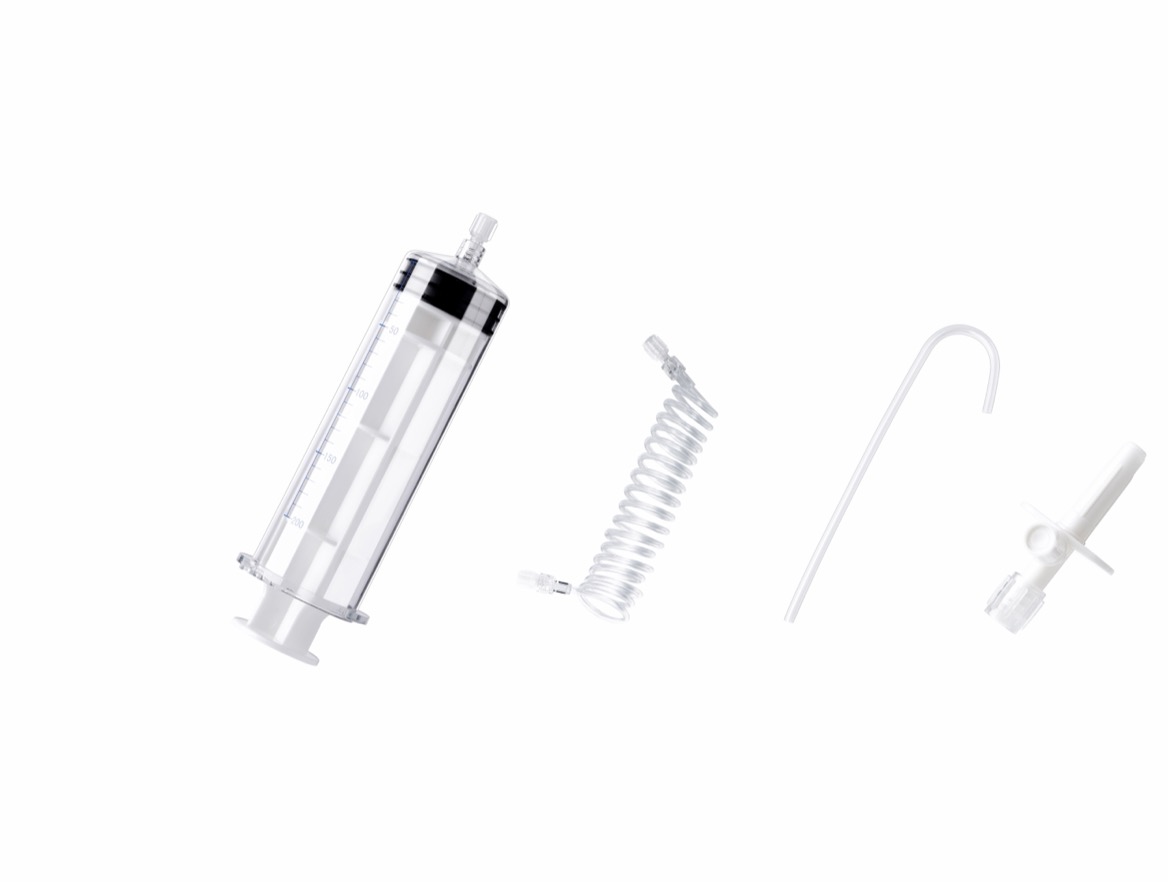
External leakage and contrast extravasation require different investigations.
| Observation | External fluid-path leakage | Contrast extravasation |
|---|---|---|
| Where contrast goes | Outside the syringe, tubing, or connection | Into tissue around vascular access |
| Possible signs | Wet connections, droplets, visible spraying | Pain, swelling, tenderness, other local changes |
| Primary concern | Device integrity and interrupted delivery | Patient assessment and tissue injury |
| Immediate response | Stop injection and assess the system | Stop injection and initiate clinical assessment |
Both can interrupt delivery. Neither should be diagnosed solely from injector pressure.
Published extravasation statistics also must not be presented as syringe leakage rates. The 2022 updated European guidance discusses a systematic review involving 1,104,872 patients with an approximately 0.2% extravasation rate. That figure describes patient-side extravasation, not defective syringes.
The immediate priority is to stop injection safely, not to complete the programmed delivery.
Check for pain, swelling, distress, or other signs of extravasation. Notify the responsible clinician when indicated and follow the institution's assessment protocol.
Progressive pain, blistering, altered sensation, or impaired perfusion requires prompt escalation.
Manage residual pressure according to the injector instructions before disconnecting components.
Do not tighten connections while injection continues. Avoid manipulating a pressurized pathway to identify the leak.
Inspect the syringe outlet, barrel, plunger area, tubing junctions, valves, and patient-side connections.
Document where fluid first appeared, if known. Fluid can travel along surfaces, so its final location may be misleading.
Do not patch, glue, or reuse a leaking single-use component.
Replace affected items according to device instructions and local policy. If the failure location remains uncertain, follow the institution's procedure for replacing the relevant assembly.
Record:
- Injector model and relevant configuration.
- Syringe and tubing product codes.
- Lot numbers and expiry dates.
- Programmed flow and pressure limit.
- Observed pressure and alarm messages.
- Contrast formulation and temperature, if available.
- Leak location and patient findings.
Preserve implicated products only through approved biohazard and incident-handling procedures. Do not recreate the fault using a patient-connected system.
A structured investigation is more useful than assuming every event has the same cause.
| Pattern | Investigate first | Do not assume |
|---|---|---|
| Leakage concentrated at one connection | Assembly method, connector condition, compatibility | The syringe barrel failed |
| Pressure rises before leakage | Kinks, restrictions, catheter suitability, viscosity | Higher pressure settings will solve it |
| Events associated with one lot | Storage, handling, manufacturing records | The lot is defective without investigation |
| Events associated with one injector | Loading, interface compatibility, equipment condition | Every syringe is unsuitable |
| Patient swelling without visible external leakage | Vascular access and extravasation | An intact syringe excludes injury |
For trend analysis, record the denominator: how many assemblies were used under comparable conditions?
For example, "three complaints" is less informative than "three reported connector leaks among 8,000 documented uses." Even then, reporting completeness and differences in operating conditions affect interpretation.
This framework is a proposed quality-improvement approach, not a validated diagnostic test.
The Pennsylvania Patient Safety Authority documented 29 reports of IV tubing rupture during contrast injection between July 2004 and March 2008.
Reported consequences included contrast splashing patients and blood or fluid contacting staff. The advisory emphasized that conventional IV sets could be unsuitable for power injection.
These are historical incident reports, not current prevalence estimates. Their continuing value is the failure mechanism they illustrate: selecting a suitable syringe while overlooking downstream tubing can leave the system vulnerable.
For hospitals and distributors, that makes assembly-level verification an important purchasing and training consideration.
Request the exact injector models supported by each product code, including any required adapters or configuration restrictions.
A broad compatibility statement is not enough for deployment.
Useful supplier documentation should identify:
- Intended use and compatible equipment.
- Labeled pressure and flow limitations.
- Connection and loading instructions.
- Storage conditions and shelf life.
- Applicable verification evidence.
A burst-test result should not be treated as a routine operating limit. Ask how testing relates to labeled use and the proposed assembly.
ISO 13485 concerns a medical-device quality management system. CE documentation and U.S. regulatory status have different scopes and should be reviewed separately.
An FDA 510(k) is a clearance pathway, not a general certification of every product a company sells. Buyers should verify the legal manufacturer, device description, and covered models.
MAIWEI INC. describes its portfolio as high-pressure syringes, connecting tubes, and related consumables for CT, MRI, and angiography, serving hospitals, distributors, and OEM customers.
Its supplied company profile reports ISO 13485 certification, CE conformity documentation, applicable FDA 510(k) clearances, and exports to more than 60 countries and regions. These company-level statements should be checked against current documentation for the specific product being purchased.
For a compatibility review, provide your injector model, proposed consumable configuration, required flow rate, and operating pressure conditions. Request the corresponding compatibility statement, instructions, and regulatory documentation.
This is a more reliable basis for procurement than choosing by price, appearance, or syringe capacity alone.
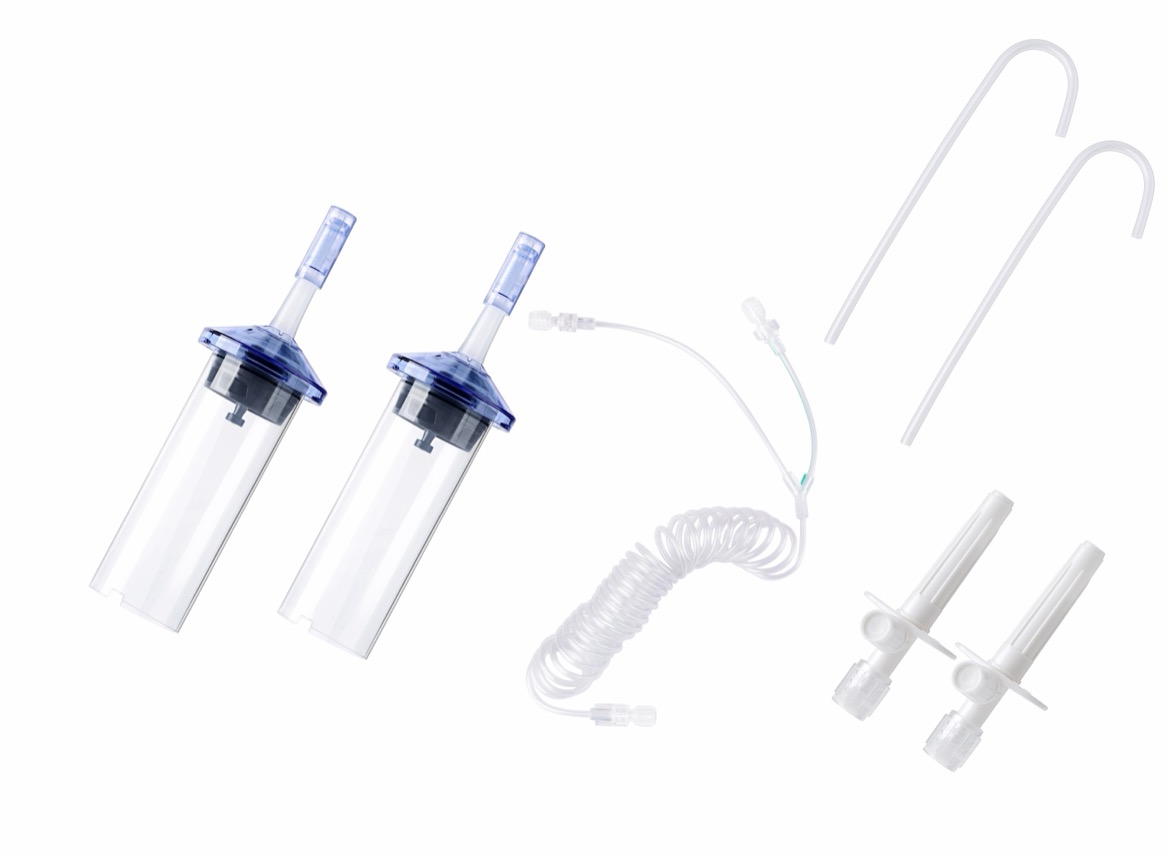
No. Leakage suggests a containment problem or an unsuitable operating condition. A correctly selected product is intended to function within its labeled conditions, but compatibility and assembly still matter.
Yes. Damage, incorrect assembly, an insecure connection, or another nonconformity may cause leakage below the rating. The rating does not eliminate the need for inspection and correct use.
Not as an automatic response. Investigate resistance and confirm the limits of the entire assembly. Any setting change must follow device instructions and the authorized clinical protocol.
No. It supports assessment of access patency, but contrast viscosity and subsequent movement can change conditions. Continue the required monitoring during injection.
No. Pressure monitoring does not replace patient observation and clinical assessment. Extravasation can require intervention even without a clear pressure warning.
Request model-specific compatibility, labeled operating conditions, current instructions, traceable product identification, applicable regulatory documentation, and a clear complaint-investigation process.
1. Pennsylvania Patient Safety Authority. "CT Contrast Media Power Injectors Can Rupture Conventional IV Sets." Pennsylvania Patient Safety Advisory, December 2008. Supports the historical incident count, tubing-failure discussion, and assembly-level pressure precautions. [patientsafety.pa]
2. Roditi G, Khan N, van der Molen AJ, et al. "Intravenous contrast medium extravasation: systematic review and updated ESUR Contrast Media Safety Committee Guidelines." European Radiology, 2022;32:3056–3066. DOI: 10.1007/s00330-021-08433-4. Supports extravasation statistics, viscosity considerations, detection limitations, and clinical escalation principles. [pmc.ncbi.nlm.nih]
3. UCSF Radiology. "CT and X-ray Contrast Guidelines Information." Supports vascular-access checks, patient observation, and stopping injection when extravasation is suspected. [radiology.ucsf]
4. "Pressure injectors for radiologists: A review and what is new." Indian Journal of Radiology and Imaging, 2015. Supports the explanation of injection-system components and preparation principles. [pmc.ncbi.nlm.nih]
5. U.S. Food and Drug Administration. "510(k) Premarket Notification: K253048." Applicant: Shenzhen Maiwei Biotech Co., Ltd. Decision date: April 16, 2026. Device description includes high-pressure syringes and connecting consumables. The record names Shenzhen Maiwei Biotech; its relationship to the MAIWEI INC. trading name should be confirmed before publication. [accessdata.fda]