


close
Choose Your Site
Global
Social Media
Views: 288 Author: Maiwei Biotech Publish Time: 2026-10-22 Origin: Site


Content Menu
● Why Properly Connected Tubing Does Not Guarantee a Leak-Free Syringe
● Six Reasons a High-Pressure Injector Syringe May Leak
>> 1. The Plunger Seal Is Damaged or Not Sealing Correctly
>> 2. The Syringe Barrel or Outlet Has a Small Crack
>> 3. The Connector Is Locked but the Sealing Surfaces Are Compromised
>> 4. The Syringe and Injector Are Not a Validated Combination
>> 5. Downstream Resistance Raises Pressure
>> 6. The Tubing Pulls Sideways on the Syringe Outlet
● Why a Syringe Leaks During Contrast Injection but Not During Saline Flushing
● What to Do When a Contrast Injector Syringe Leaks
>> Step 1: Stop Injection and Assess the Patient
>> Step 2: Make the System Safe Before Handling
>> Step 3: Locate the Apparent Origin
>> Step 4: Replace Compromised Disposables
>> Step 5: Recheck the Complete Assembly
● A Manufacturing Investigation: Separate the Failure Site from the Root Cause
>> Information That Helps Resolve a Complaint
● How Procurement Teams Can Reduce Syringe Leakage Risk
>> Ask for Model-Specific Compatibility Evidence
>> Distinguish Connector Standards from Complete-System Performance
>> Check Regulatory Claims at Product Level
● Discuss Your Injection Configuration with MAIWEI INC.
>> Can a Syringe Leak Even If the Luer Lock Feels Tight?
>> Should I Tighten the Tubing More to Stop a Leak?
>> Does a Successful Saline Flush Prove the Syringe Will Not Leak?
>> Is Syringe Leakage the Same as Contrast Extravasation?
>> Can a Leaking Disposable Syringe Be Repaired?
>> Does Every Compatible-Looking Syringe Work with My Injector?
A syringe can leak even when the tubing is properly connected because a secure connection is only one part of a pressure-tight fluid pathway. A damaged plunger seal, a cracked syringe barrel, incompatible components, or excessive resistance downstream can allow fluid to escape elsewhere.
In CT, MRI, and angiography, this distinction matters. High-pressure injection places demands on the entire assembly—not just the connection you can see.
From a manufacturing perspective, the most useful question is not simply, "Is the tubing tight?" It is, "Where has the fluid pathway lost its integrity, and under what conditions?"
This guide explains the possible causes of contrast injector syringe leakage, how to interpret the evidence, and when replacement or technical investigation is necessary.
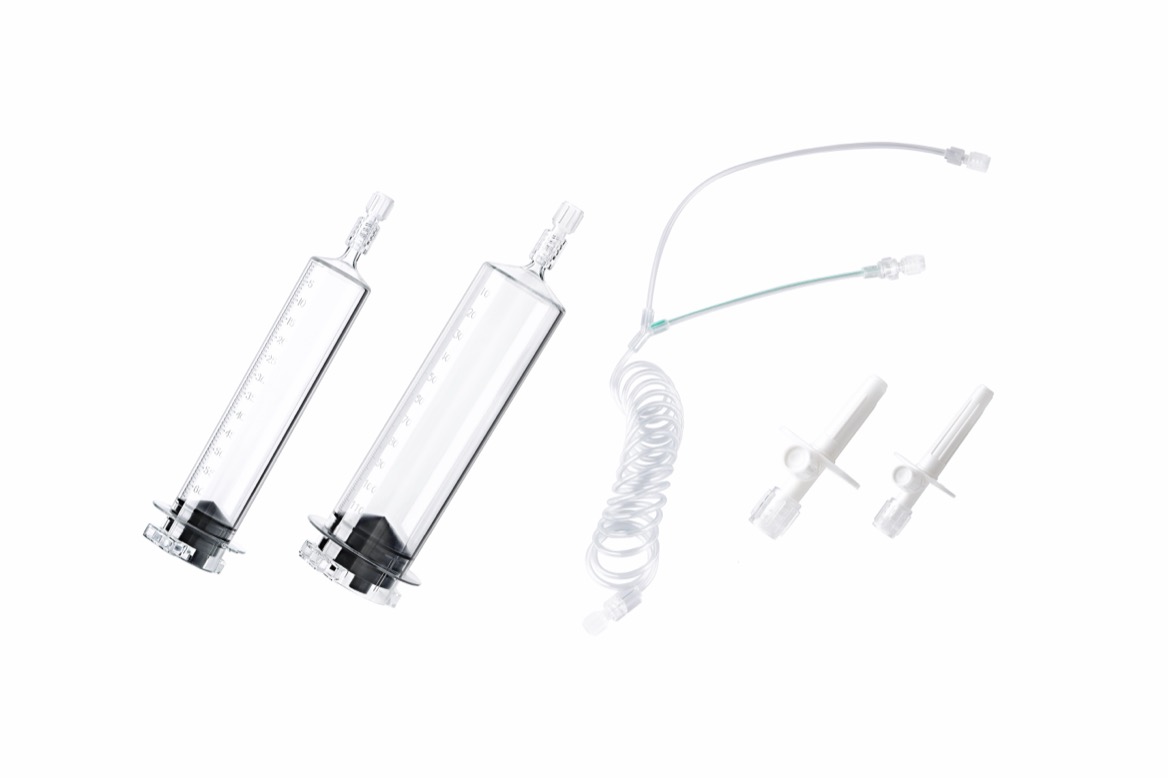
A high-pressure injection assembly contains several potential failure points:
- The syringe outlet and tubing connector.
- The syringe barrel and outlet transition.
- The plunger-to-barrel seal.
- Tubing bonds, adapters, valves, and downstream connections.
A securely attached connector does not confirm that all these areas are intact.
Even the connection itself requires more than thread engagement. In a conventional Luer-lock connection, the mating tapered surfaces form the fluid seal; the locking mechanism helps retain the connection. A connector can therefore feel tight while damage, contamination, or incorrect engagement compromises sealing.
The central principle is integrity: every component must remain suitable for the intended pressure, fluid, equipment, and operating conditions.
This article supports trained personnel and does not replace device instructions, institutional procedures, or clinical judgment.
The plunger must maintain contact with the syringe barrel as the injector advances it. If that sealing interface is defective or damaged, fluid may bypass the plunger instead of leaving exclusively through the outlet.
Possible warning signs include:
- Fluid appearing behind the plunger.
- Wetness near the rear of the syringe.
- Visible deformation or irregularity at the sealing edge.
A correctly connected extension tube cannot compensate for an internal seal problem.
Do not attempt to repair, lubricate, or reposition a disposable syringe seal unless the product instructions explicitly permit it. Replace the affected disposable and preserve relevant identification for investigation.
A hairline crack may be difficult to detect during unpacking. It can become apparent only when the syringe is filled or pressurized.
Potential contributors include handling damage, unsuitable storage, or mechanical stress during assembly. Investigation is needed before attributing an individual failure to any one cause.
Pay particular attention to the outlet transition, flange, and other areas exposed to assembly forces. Fluid can travel along the syringe surface, making a barrel leak look like a connector leak.
If damage is suspected, remove the syringe from service. A successful low-pressure check does not establish that a cracked component is safe for power injection.
"Properly connected" sometimes means the connector threads are engaged—not that the mating surfaces are undamaged and correctly seated.
Possible problems include:
- Cross-threading.
- Cracked connector material.
- Residue or particles on the sealing interface.
- Incomplete seating.
- Damage caused by excessive tightening.
More force is not a reliable solution. Follow the specified connection method rather than using tools or repeatedly tightening a leaking assembly.
If sterility or component integrity is uncertain, replace the affected parts instead of cleaning and reconnecting disposable sealing surfaces.
Two syringes may look similar without being interchangeable.
Compatibility involves more than nominal volume or connector appearance. It can include barrel geometry, mounting features, plunger engagement, injector recognition, and permitted operating conditions.
Incorrect installation or an unsuitable syringe can compromise mechanical support and fluid delivery.
For a syringe advertised as compatible with a major injector brand, confirm the exact injector model and disposable part number. Brand-level compatibility alone is insufficient, and a supplier's claim should not override the injector's instructions or institutional approval requirements.
A restricted fluid pathway can increase the pressure needed to deliver a selected flow rate.
Potential contributors include:
- Kinked or compressed tubing.
- A closed clamp or incorrectly positioned valve.
- An unsuitable catheter or accessory.
- Narrow or unnecessarily long tubing.
- Higher-viscosity contrast medium.
Higher resistance does not prove that the syringe is defective. However, it may expose a compromised seal or component that did not leak during filling.
Do not raise the injector pressure limit to overcome an unexplained restriction. Identify the cause and verify that the entire assembly is appropriate for the intended procedure.
A connection may be correctly assembled initially but experience mechanical loading during use.
Taut tubing, unsupported accessories, or table movement can pull on the connector and syringe outlet. Adequate tubing slack and appropriate routing help reduce this stress.
Avoid treating all CT, MRI, and angiography setups as equivalent. Equipment movement, available space, and approved accessory configurations differ.
A low-pressure saline flush and a programmed contrast injection do not necessarily impose the same conditions.
Contrast viscosity, flow rate, tubing dimensions, and vascular access can change the pressure required for delivery. A small defect may remain unapparent during preparation and become visible during a higher-demand phase.
| Observation | What it may suggest | Important limitation |
|---|---|---|
| Leakage during filling | Existing damage or poor sealing | Does not establish the precise cause |
| Leakage as flow increases | Pressure-dependent sealing problem or increased resistance | Pressure alone cannot identify the failed component |
| Fluid behind the plunger | Possible plunger seal bypass | Confirm the origin after safe isolation |
| Wetness around the outlet | Connector or outlet damage | Fluid may have tracked from elsewhere |
| Leakage after table movement | Possible tension or movement-related loading | Inspect the complete pathway |
These are investigation clues, not diagnostic rules. Do not reproduce the fault through repeated patient-connected injections.
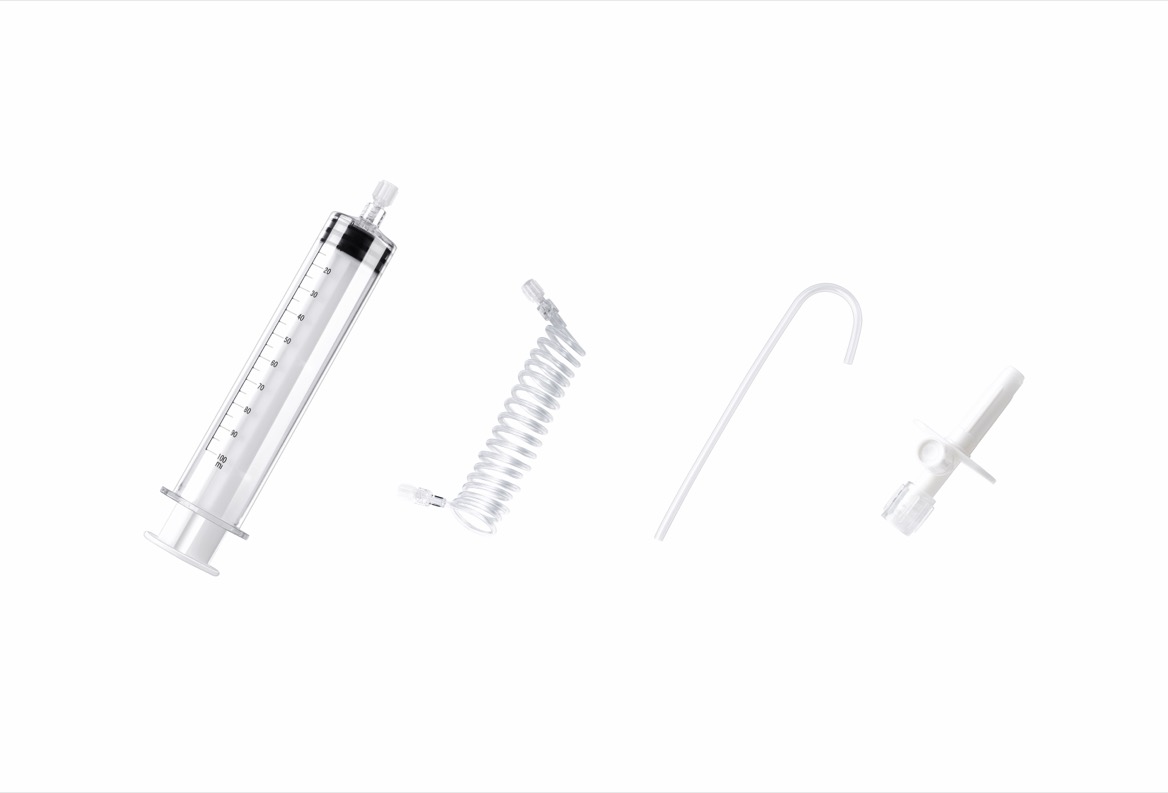
Stop the injection according to the equipment instructions and institutional procedure.
Check the patient and vascular access site. External fluid leakage from a syringe is different from extravasation, where fluid enters tissue outside the vessel. One does not rule out the other.
Pain, swelling, or other concerning symptoms require prompt clinical assessment.
Follow the manufacturer's procedure for stopping and safely relieving pressure before disconnecting or removing components.
Do not tighten, manipulate, or disconnect a pressurized assembly. Keep hands away from any suspected pressurized leak.
After safe isolation, inspect the outlet, barrel, plunger area, tubing, and accessory connections.
Record where fluid first appeared if this was observed. The largest wet area may not be the source because liquid can spread along surfaces.
Replace leaking, damaged, contaminated, or suspect components according to the applicable instructions.
Do not patch cracks, add tape, apply adhesive, or reuse a single-use syringe. Replacing only the tubing is inadequate if the syringe itself has lost integrity.
Before resuming, verify:
1. Exact injector and syringe compatibility.
2. Correct syringe loading and engagement.
3. Applicable pressure and flow limits for every component.
4. Unrestricted tubing and correct valve positions.
5. Appropriate vascular access.
6. Air removal and required preparation checks.
The decision to restart belongs to trained clinical personnel following the approved workflow.
For hospitals and distributors, "the syringe leaked" describes an event. It does not yet explain why it happened.
A useful complaint record captures three separate questions:
- Where did fluid escape?
- When did the leakage begin?
- What conditions were present?
For example, an outlet leak could involve connector damage, incorrect engagement, tubing tension, or an unsuitable component combination. The same visible symptom can have different causes.
Preserve or document, according to local biohazard procedures:
- Product code, lot number, and expiry date.
- Injector model and relevant alarms.
- Programmed flow rate and pressure limit.
- Available pressure history.
- Contrast product and handling conditions.
- Tubing, adapter, and catheter details.
- Photographs taken without patient identifiers.
Report repeated failures through the institution's quality process. A cluster involving one lot merits investigation, but it does not establish a manufacturing defect without supporting evidence.
This evidence-based approach is more useful than replacing components repeatedly without recording the circumstances.
Request a clear compatibility matrix, current instructions, and relevant performance documentation.
Ask whether the evaluated configuration includes the proposed syringe, connector tubing, adapters, and intended operating conditions—not just an isolated connector.
The ISO 80369-7 standard addresses intravascular and hypodermic connector dimensions and functional performance. It does not, by itself, establish the pressure-injection suitability of every device incorporating that connector.
A connector that fits is not automatically appropriate for a particular high-pressure procedure.
Likewise, one high-rated component does not increase the permitted operating limits of other components. Follow each device's labeling and the validated system configuration.
Quality certification, market conformity, and regulatory clearance have different meanings.
ISO 13485 concerns a medical-device quality management system. CE marking and FDA 510(k) clearance should be checked against the applicable product and market. A 510(k) clearance is not the same as FDA approval.
None of these replaces model-specific compatibility verification or pre-use inspection.
MAIWEI INC. develops and manufactures syringes, connecting tubing, and related consumables for CT, MRI, and angiography applications.
For hospitals, distributors, and OEM customers, a useful technical discussion starts with the actual configuration—not simply the requested syringe size.
Contact MAIWEI INC. with your injector model, required syringe volume, tubing configuration, intended pressure and flow conditions, and destination market. Request the relevant compatibility information, product specifications, and applicable regulatory documentation before selection.
If you are investigating leakage, include the product code, lot number, and event details so the issue can be assessed systematically.
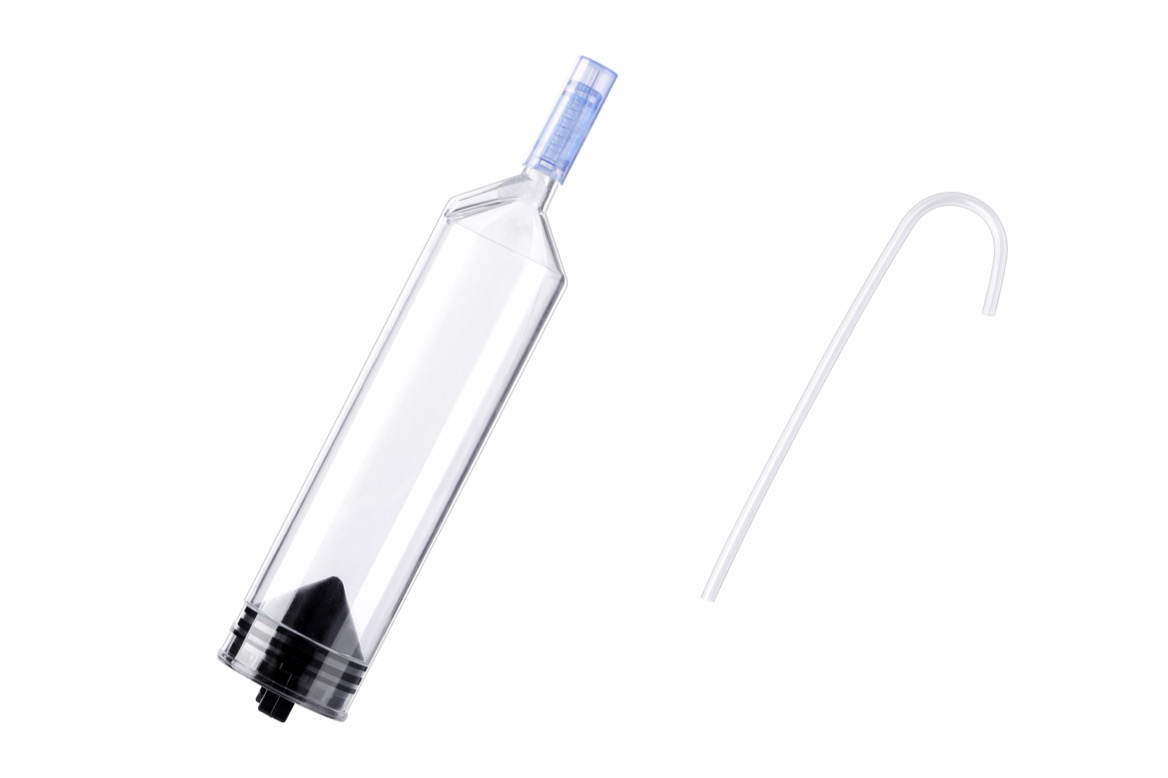
Yes. Tightness does not prove that the mating surfaces are intact or correctly seated. Fluid may also escape through a damaged barrel or plunger seal rather than the connector.
Do not assume additional tightening is safe. Excessive force can damage components. Stop injection, make the system safe, and follow the device instructions for inspection and replacement.
No. Contrast injection may involve different viscosity, flow, and pressure conditions. A flush is one preparation check, not a guarantee of leak-free performance throughout the procedure.
No. Syringe leakage is fluid escaping from the device assembly. Extravasation is fluid entering surrounding tissue outside the vessel. Both require an appropriate response, and the patient must be assessed.
Do not repair a leaking single-use power-injector syringe. Replace compromised components and retain identification details for the complaint investigation.
No. Confirm the exact model, part number, approved configuration, and operating limits. Similar appearance, matching volume, or a common connector does not establish compatibility.
1. Indrajit IK, Sivasankar R, D'Souza J, et al. "Pressure injectors for radiologists: A review and what is new." *Indian Journal of Radiology and Imaging*. 2015;25(1):2–10. DOI: 10.4103/0971-3026.150105. Supports the discussion of injection-system components, resistance, viscosity, preparation, and patient safety; historical numerical estimates are not used here. [Read the article]. [pmc.ncbi.nlm.nih]
2. International Organization for Standardization. *ISO 80369-7:2016: Small-bore connectors for liquids and gases in healthcare applications—Part 7*. Supports the distinction between connector requirements and device-level requirements. The catalog identifies this edition as withdrawn and revised by the 2021 edition; consult the applicable current requirements. [View the standard record]. [iso]
3. U.S. Food and Drug Administration. "Reducing Risks through Standards Development for Medical Device Connectors." Explains connector standards and their role in reducing misconnections. [Read the guidance]. [fda]
4. U.S. Food and Drug Administration. "Premarket Notification 510(k)." Explains substantial equivalence and clearance terminology. [Read the regulatory overview]. [fda]
5. World Precision Instruments. "10 Common Reasons Why Syringes Leak and What You Can Do." Supports general failure mechanisms involving seals and barrel damage. This source concerns laboratory syringes, not contrast-injector operating procedures. [Read the article]. [wpiinc]