


close
Choose Your Site
Global
Social Media
Views: 215 Author: Maiwei Biotech Publish Time: 2026-10-27 Origin: Site


Content Menu
● How Does a Contrast Injector Syringe Plunger Move?
>> Plunger Friction Versus Injection Pressure
● Common Reasons a Contrast Injector Syringe Plunger Is Difficult to Move
>> 1. Excessive Seal-to-Barrel Friction
>> 2. Incorrect Syringe Installation or Drive Engagement
>> 3. High Contrast-Media Viscosity
>> 4. Restricted Tubing, Connectors, or Vascular Access
>> 5. Damage, Expiry, or Unsuitable Storage
● Diagnose a Stiff Contrast Injector Plunger by When Resistance Appears
>> Why Manual "Feel" Is Not a Complete Test
● A Safe Troubleshooting Workflow for Radiology Teams
>> Step 1: Stop and Prioritize the Patient
>> Step 2: Verify the Exact Product Combination
>> Step 3: Review Preparation and the Fluid Pathway
>> Step 4: Replace Suspect Consumables When Indicated
>> Step 5: Escalate Recurrent Problems
● What Manufacturers Should Measure Beyond "Smooth Movement"
>> Why a Generic Syringe Standard Is Not Enough
● Turn a Plunger Complaint Into Useful Evidence
● Selecting a Contrast Injector Syringe Supplier
>> How MAIWEI INC. Supports Product Selection
>> Is some initial contrast injector syringe plunger resistance normal?
>> Can cold contrast make the plunger harder to move?
>> Should I increase the pressure limit when the plunger stops?
>> Can I manually lubricate a stuck syringe plunger?
>> Does a pressure alarm mean the syringe is defective?
>> What should I send the manufacturer when reporting resistance?
A plunger that is difficult to move in a contrast injector syringe usually indicates excessive seal friction, resistance in the fluid pathway, incorrect syringe loading, or incompatibility between the syringe and injector. Contrast viscosity can also increase the force required during delivery. The essential distinction is whether resistance comes from the syringe itself or from the connected injection system.
From a manufacturing and technical-support perspective, a "stiff plunger" is a symptom—not a diagnosis. Identifying when resistance appears helps radiology teams investigate safely and gives suppliers the information needed for a meaningful assessment.
Safety: Never force a resistant plunger, bypass an alarm, or increase pressure limits simply to complete an injection. Follow the applicable instructions for use and your facility's clinical procedures.
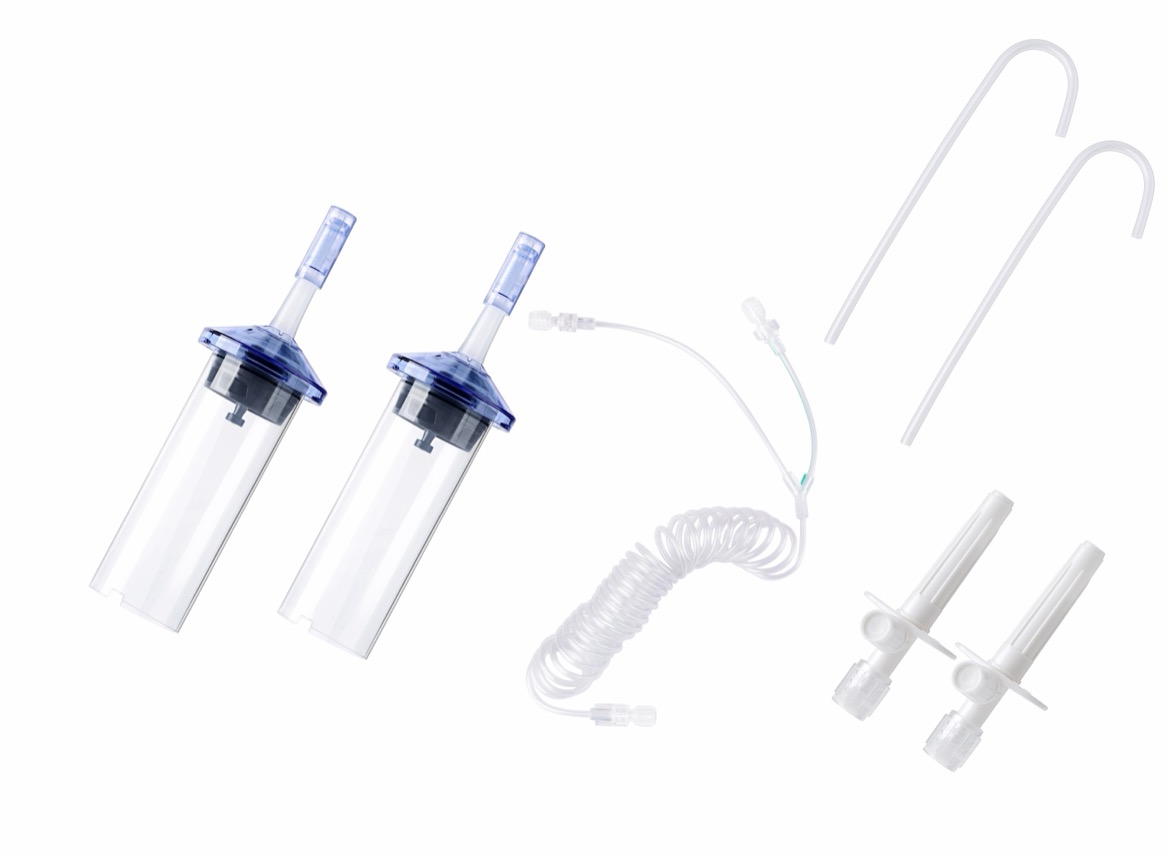
A contrast injector advances the syringe plunger to deliver fluid at a programmed rate. The drive must overcome both mechanical friction inside the syringe and hydraulic resistance in the fluid pathway.
Two concepts help explain plunger behavior:
- Break-loose force: the force required to start movement from a resting position.
- Glide force: the force required to maintain movement after the plunger starts.
A plunger may feel resistant initially but move more smoothly afterward. Alternatively, resistance may persist throughout travel or appear only during fluid delivery.
These patterns matter because they point toward different investigations. However, a small initial resistance is not automatically acceptable: performance must remain within the specifications validated for the particular syringe and injector combination.
Plunger friction occurs at the interface between the seal and syringe barrel. Injection pressure reflects resistance encountered while moving fluid through the connected pathway.
A pressure-limit alarm does not, by itself, prove that the syringe plunger is defective. Tubing, connectors, catheter characteristics, fluid viscosity, and the selected flow rate also influence system behavior.
The plunger seal must maintain a fluid-tight interface while moving consistently. Its performance depends on factors such as elastomer properties, barrel dimensions, surface condition, and the validated lubrication or coating system.
Manufacturing variation or a damaged interface can increase resistance. In designs that use lubrication, its distribution can also influence break-loose and glide behavior.
Do not add silicone oil, saline, or another substance to "free" a plunger unless the product instructions explicitly require it. An improvised adjustment can compromise the validated fluid-contact system.
A compatible syringe must still be installed correctly.
Depending on the injector design, problems may involve incomplete seating, incorrect locking, or failure to engage the plunger with the drive mechanism. The relevant loading sequence is model-specific.
Check the exact injector model, syringe catalog number, and installation instructions. A syringe that appears to fit is not necessarily mechanically compatible.
Avoid repeatedly cycling a questionable syringe as an informal test. Follow only the preparation and troubleshooting steps authorized for that system.
Viscosity describes a fluid's resistance to flow. More viscous contrast can require greater pressure to deliver through the same pathway at the same flow rate.
Temperature can make a substantial difference. The OMNIPAQUE prescribing information lists these values:
| Iohexol concentration | Viscosity at 20°C | Viscosity at 37°C |
|---|---|---|
| 300 mg iodine/mL | 11.8 cP | 6.3 cP |
| 350 mg iodine/mL | 20.4 cP | 10.4 cP |
These product-specific figures illustrate why contrast temperature belongs in a troubleshooting record. They are not universal values for iodinated contrast or MRI contrast agents.
Warming is not a remedy for a mechanically jammed syringe. Use only warming and storage practices permitted by the contrast labeling, device instructions, and facility policy.
A freely moving plunger can encounter substantial resistance once connected to a restricted fluid pathway.
Potential contributors include:
- Kinked or compressed connecting tubing.
- A closed clamp or incorrectly positioned stopcock.
- An obstructed connector.
- A catheter unsuitable for the intended power-injection conditions.
- A flow rate that exceeds the validated capability of the assembled pathway.
The entire assembly matters. A high-pressure-rated syringe does not make every connected component suitable for the same operating conditions.
If resistance develops during patient injection, follow the clinical response procedure rather than attempting to overcome it mechanically.
Inspect the syringe and packaging before use. A cracked barrel, distorted component, compromised sterile barrier, or expired product requires action under the product instructions and facility procedures.
Storage history is also relevant when investigating unusual performance. Record any known exposure outside labeled conditions.
Shelf-life evaluation should establish that relevant performance remains acceptable through expiry. Nevertheless, unusual resistance alone cannot establish whether storage, aging, or a manufacturing issue caused the problem.
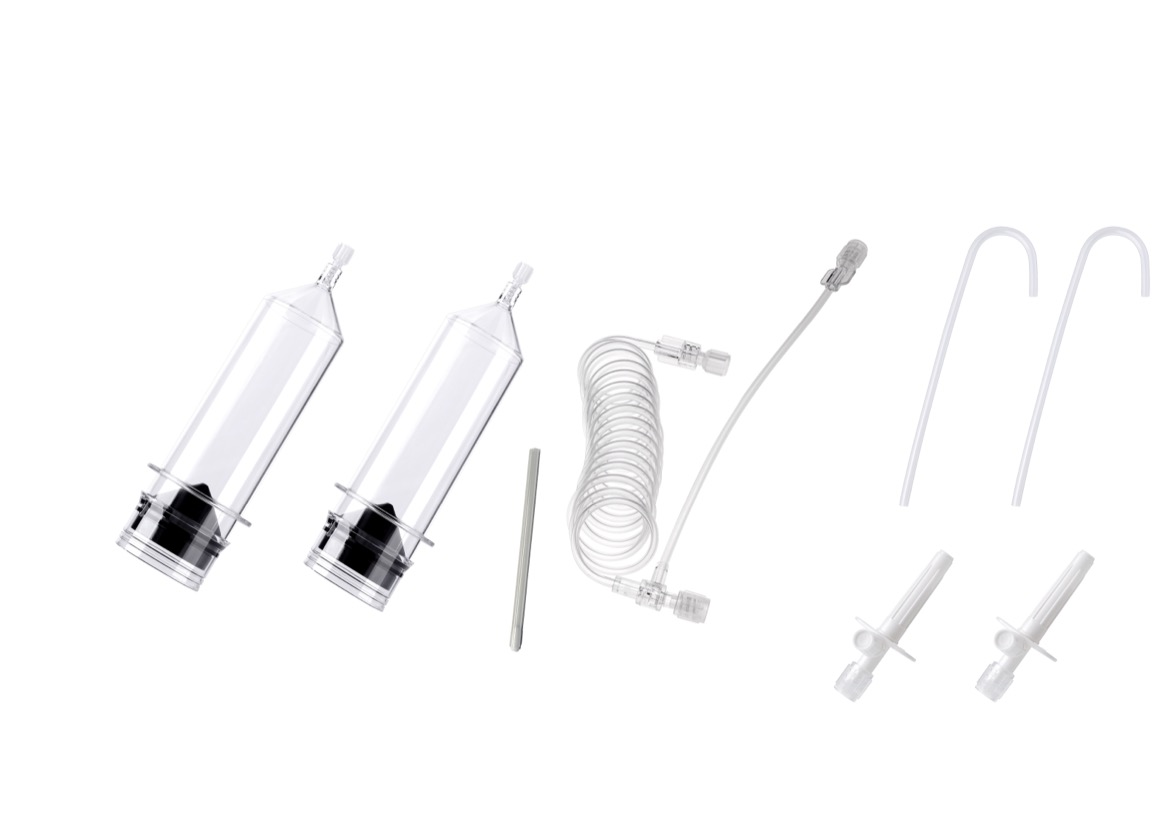
The timing of resistance is often more useful than describing the syringe as simply "hard to push."
| Observed pattern | Possible explanation | Appropriate next step |
|---|---|---|
| Resistance appears during initial preparation | Seal friction, damage, or a preparation issue | Stop and assess against the syringe instructions |
| Difficulty begins after mounting | Seating, compatibility, or drive engagement | Verify the model, catalog number, and loading sequence |
| Resistance appears during priming | Fluid viscosity or a restricted pathway | Inspect the setup using the approved procedure |
| Pressure rises during patient injection | Downstream resistance or an access-related problem | Follow the facility's immediate clinical response protocol |
| Similar complaints involve one lot | A potentially shared product or handling factor | Preserve traceability and notify quality personnel |
These are investigative starting points, not confirmed diagnoses. Several causes can produce similar symptoms.
Hand pressure is subjective. Different operators, fluid conditions, and handling methods can produce different impressions.
A syringe that feels smooth manually has not thereby demonstrated acceptable performance under power injection. Conversely, resistance during delivery does not isolate the syringe as the source.
Formal assessment requires defined conditions and appropriate test equipment.
If resistance or an alarm occurs during injection, stop according to the injector instructions and clinical protocol. Assess the patient and vascular access as appropriate.
Pain, swelling, leakage, or other concerning findings require clinical attention—not a higher pressure setting.
Confirm:
1. Injector manufacturer and model.
2. Syringe catalog number and intended compatibility.
3. Correct installation and drive engagement.
4. Tubing, connector, and catheter power-injection suitability.
5. Applicable pressure and flow limitations.
Do not infer compatibility from syringe volume or connector appearance alone.
Following the applicable instructions, check loading, tubing routing, clamp positions, and connections.
Air removal remains essential. Air-detection features support safe operation but do not replace the operator's required inspection and preparation procedures.
Do not disconnect or manipulate a pressurized system. Use the manufacturer's procedure for safely stopping and relieving pressure.
If a disposable component is damaged, incompatible, or persistently abnormal, remove it from clinical use according to local procedures.
Do not dismantle, relubricate, or reprocess a single-use syringe to restore movement.
Retain packaging and lot information. Preserve the affected device only through an approved process that addresses contamination and sharps risks.
If problems persist with an appropriately selected replacement, involve qualified technical support or biomedical engineering. Repeated replacement without investigation may overlook an equipment or setup problem.
For procurement teams, a claim of "smooth plunger movement" is less useful than a defined performance assessment.
A meaningful evaluation should consider:
- Initial break-loose force.
- Average and peak glide force.
- Irregular resistance throughout plunger travel.
- Leakage and pressure integrity.
- Performance on the intended injector.
- Effects of sterilization, aging, and labeled storage.
- Consistency across relevant production lots.
Ask how testing represents the intended operating conditions, including fluid properties, delivery speed, and system configuration.
ISO 7886-1 concerns sterile hypodermic syringes for manual use. Its breakaway and glide-force concepts help explain plunger behavior, but its numerical limits should not automatically become acceptance criteria for contrast power-injector syringes.
Device-specific specifications and appropriate validation remain necessary.
This distinction prevents a misleading comparison: two syringes may share a nominal volume yet have different interfaces, intended uses, and operating requirements.
A structured complaint record helps separate a product issue from an installation, fluid-pathway, or equipment issue.
Record the following whenever available:
| Information | Why it helps |
|---|---|
| Product code, lot, and expiry | Establishes traceability |
| Injector model and displayed alarm | Defines the equipment context |
| Stage when resistance appeared | Helps localize the problem |
| Contrast name, concentration, and temperature | Documents relevant fluid conditions |
| Programmed flow and pressure limit | Defines the intended operating conditions |
| Tubing and catheter configuration | Identifies downstream contributors |
| Replacement outcome | Provides an additional investigative comparison |
Photos, alarm records, and observations can strengthen an investigation when collected under facility privacy and safety rules.
A single difficult syringe does not establish a defective lot. Equally, a successful replacement does not automatically prove operator error. Conclusions should follow the evidence.
For hospitals, distributors, and OEM customers, supplier evaluation should connect documentation with the exact products being purchased.
Request model-specific compatibility information, pressure and performance specifications, shelf-life evidence, traceability arrangements, and a clear complaint-handling process.
Regulatory terminology also matters. ISO 13485 certification concerns a quality management system. CE documentation and FDA 510(k) clearance have their own applicable scopes. A 510(k) clearance should not be described as blanket approval of an entire manufacturer's portfolio.
MAIWEI INC. develops and manufactures high-pressure injector syringes, connecting tubes, and associated consumables for CT, MRI, and angiography applications.
According to the company information supplied for this article, MAIWEI serves customers in more than 60 countries and regions and holds ISO 13485 certification, with CE documentation and FDA 510(k) clearances within its portfolio. Buyers should verify the documents applicable to their selected product and destination market.
Contact MAIWEI with your injector model, required syringe volume, tubing configuration, and intended operating conditions to request compatibility information and relevant technical documentation. For an existing plunger-resistance complaint, include the product code, lot number, and circumstances of the event.
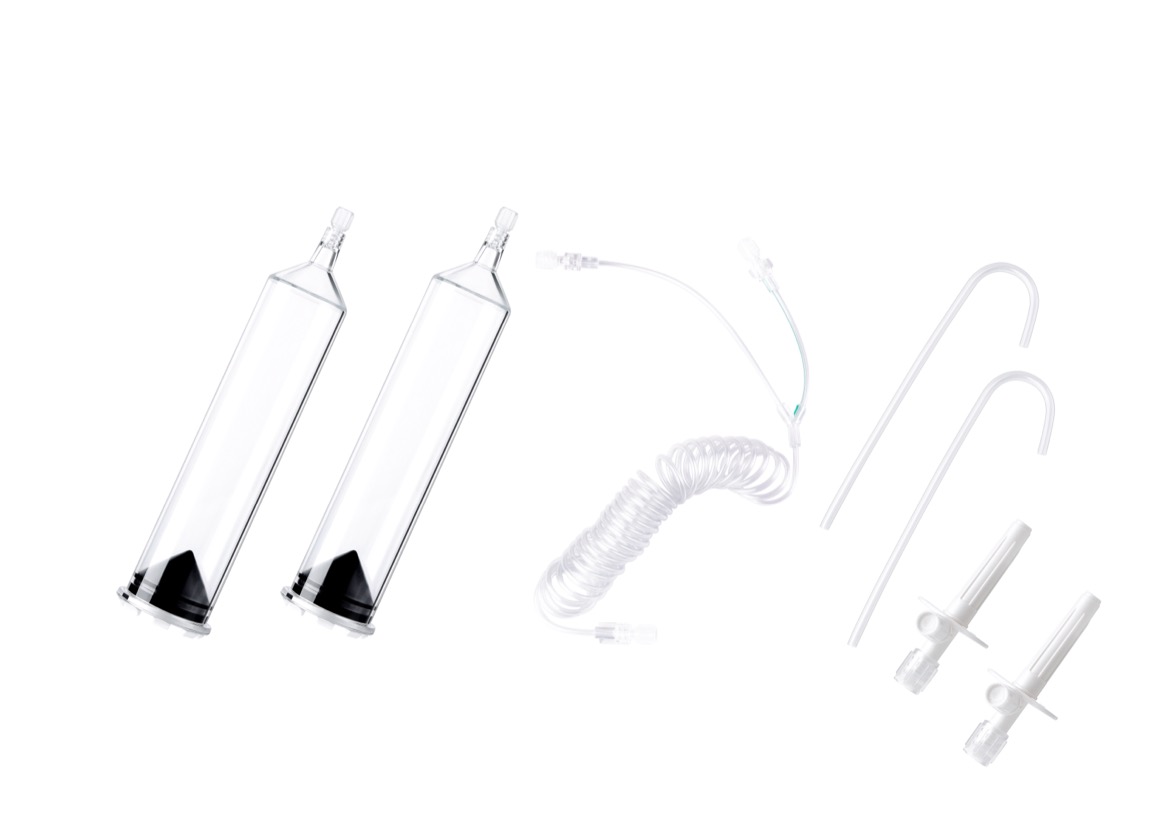
Starting movement can require more force than maintaining it. However, acceptable resistance is product-specific. Unusual or persistent stiffness should be assessed against the manufacturer's instructions, not assumed normal.
Lower temperatures can increase the viscosity of some contrast formulations, increasing delivery resistance. This does not explain every stiff plunger, particularly when resistance occurs before fluid delivery.
Not simply to overcome unexplained resistance. A pressure limit is a protective operating parameter. Investigate the cause and follow the prescribed protocol and component limitations.
Do not add lubricant or other substances unless explicitly required by the product instructions. Improvised lubrication can alter the validated device and compromise its suitability for use.
No. Possible contributors include fluid viscosity, tubing restrictions, catheter characteristics, flow settings, equipment issues, and syringe performance. The alarm requires investigation rather than an immediate assumption.
Provide the product code, lot, expiry, injector model, alarm details, fluid conditions, operating settings, and the stage when resistance appeared. Include the replacement outcome if known.
1. DailyMed, U.S. National Library of Medicine. "OMNIPAQUE—Iohexol Injection, Solution." Prescribing information, including physical characteristics and viscosity values at 20°C and 37°C. [dailymed.nlm.nih]
2. ZwickRoell. "Syringe Testing to ISO 7886-1." Explanation of the standard's manual-syringe scope and breakaway/glide-force testing. [zwickroell]
3. *BioProcess International*. "Essential Performance-Requirement Assessment of Prefilled Syringes: Break-Loose and Gliding Force Measurement and Analysis." April 15, 2025. Used for general friction concepts, not contrast-injector acceptance limits. [bioprocessintl]
4. *Indian Journal of Radiology and Imaging*. "Pressure Injectors for Radiologists: A Review and What Is New." Review of injector operation and safety considerations. [pmc.ncbi.nlm.nih]
5. Pennsylvania Patient Safety Authority. "Venous Air Emboli and Automatic Contrast Media Injectors Advisory." Guidance on preparation, inspection, and the limitations of air-detection features. [patientsafety.pa]
6. U.S. Food and Drug Administration. "Device Approvals and Clearances." Explanation of the 510(k) substantial-equivalence pathway. [fda]